HASS- Unifying a Global Service Ecosystem
HASS- Unifying a Global Service Ecosystem
A Strategic UX Transformation for Samsung Electronics
A Strategic UX Transformation for Samsung Electronics
2023 - Ongoing
2023 - Ongoing
Samsung’s global service infrastructure was a fragmented legacy web. With 50+ disparate tools and 30+ appliance silos, the system was buckling under its own weight.
Mandate came top-down from Samsung HQ Korea — not only a design initiative, a business intervention
Samsung's Digital Appliance division was bleeding money on service operations
Home Appliance Smart Service (HASS) — the tool 20,000+ engineers relied on daily — was a direct contributor to that loss
Project arrived at Samsung Design Delhi with CFO-level visibility on outcomes
Design Lead Strategy, Research, IA, Wireframing, UX & GUI, Usability Testing, Dev QA
3 Designers · PM · Engineering · Customer Experience · CFO reporting
20,000+ field engineers · 50+ countries
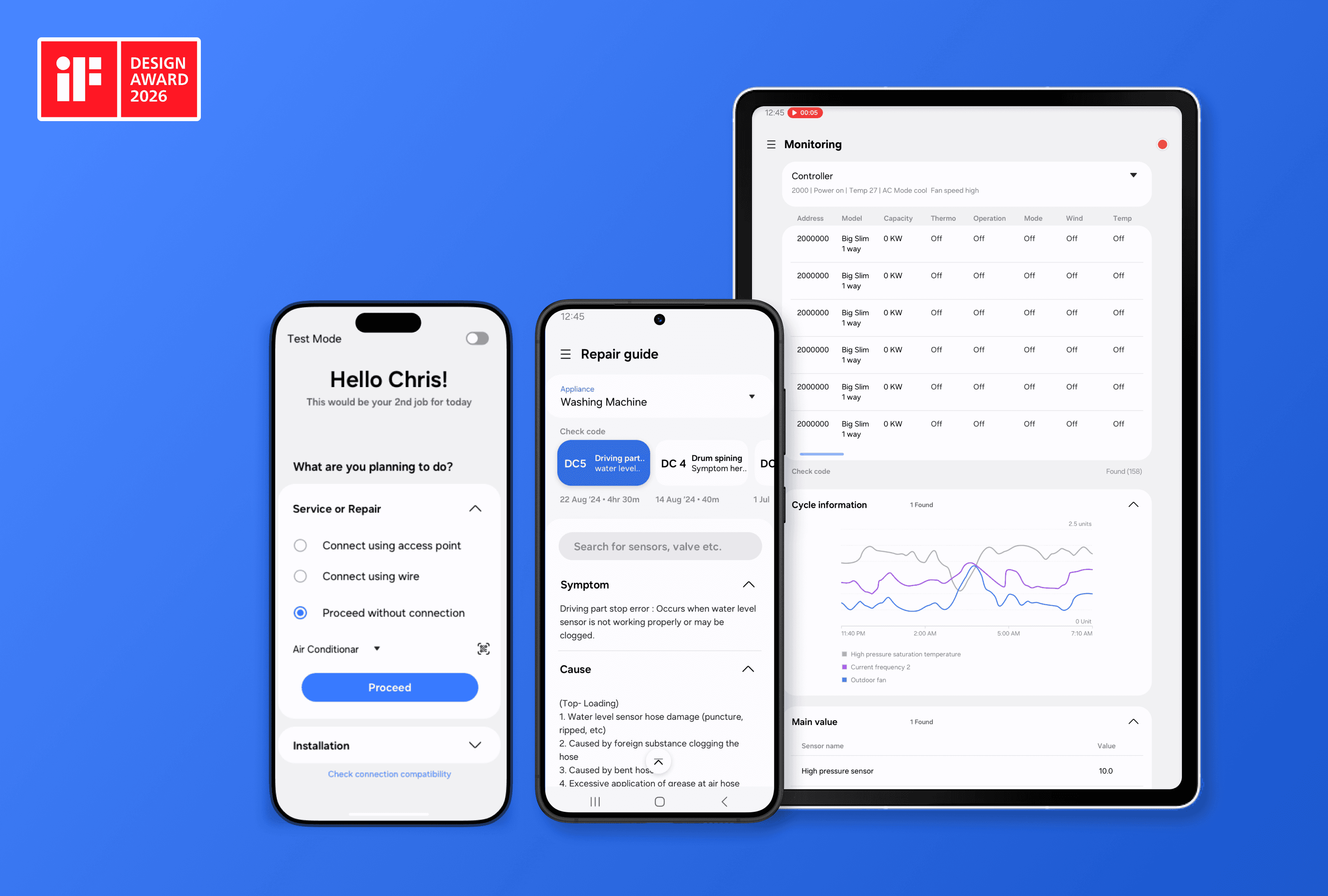
🏆 iF Design Award 2026
🥇 Samsung Gold Prize
Data Update: Figures shown in this video have been adjusted for internal confidentiality.
As of 2026, the HASS ecosystem has expanded its global footprint to over 20,000+ service engineers
Bridge between design team and CFO-level stakeholders — translating design decisions into business outcomes
Managed four distinct stakeholder relationships: Group Head of Service · PM · Developement · Customer Experinece
Philosophy: Collective intelligence over individual direction — every designer owned the product, end to end.
Hands on design (UX Guides, Usability Reports, Visuals etc.)
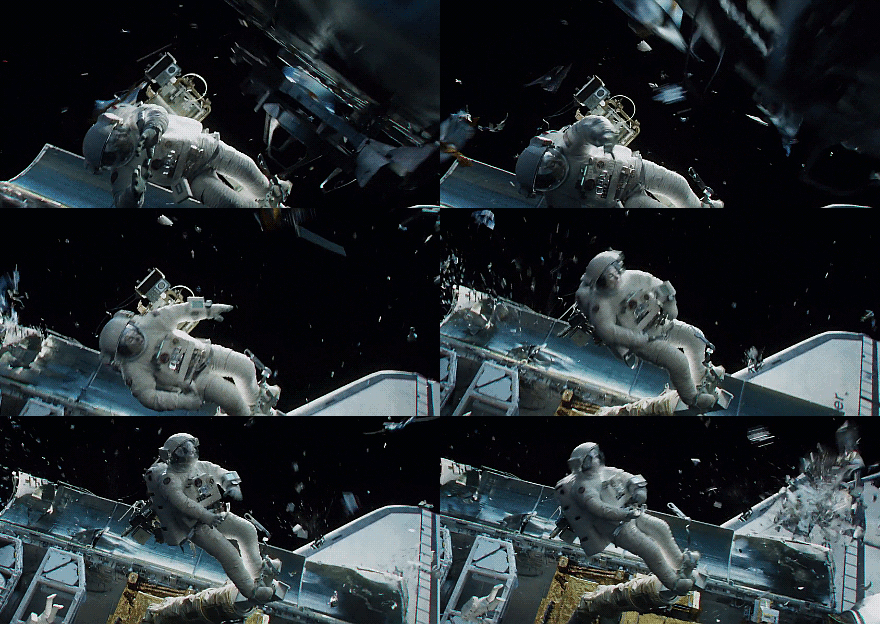
She is tethered to a station, reliant on her tools and her lifeline to Mission Control. When debris strikes, that tether snaps, and she is left drifting, isolated, overwhelmed, and fighting for every breath.
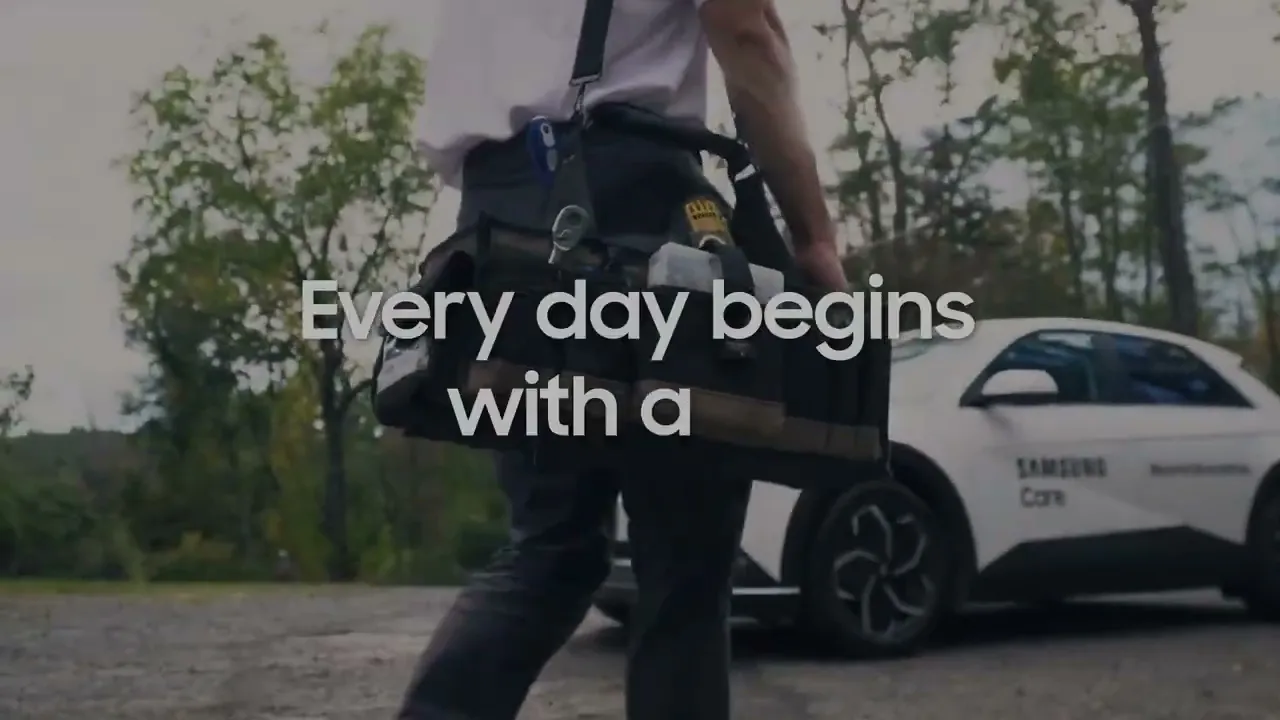
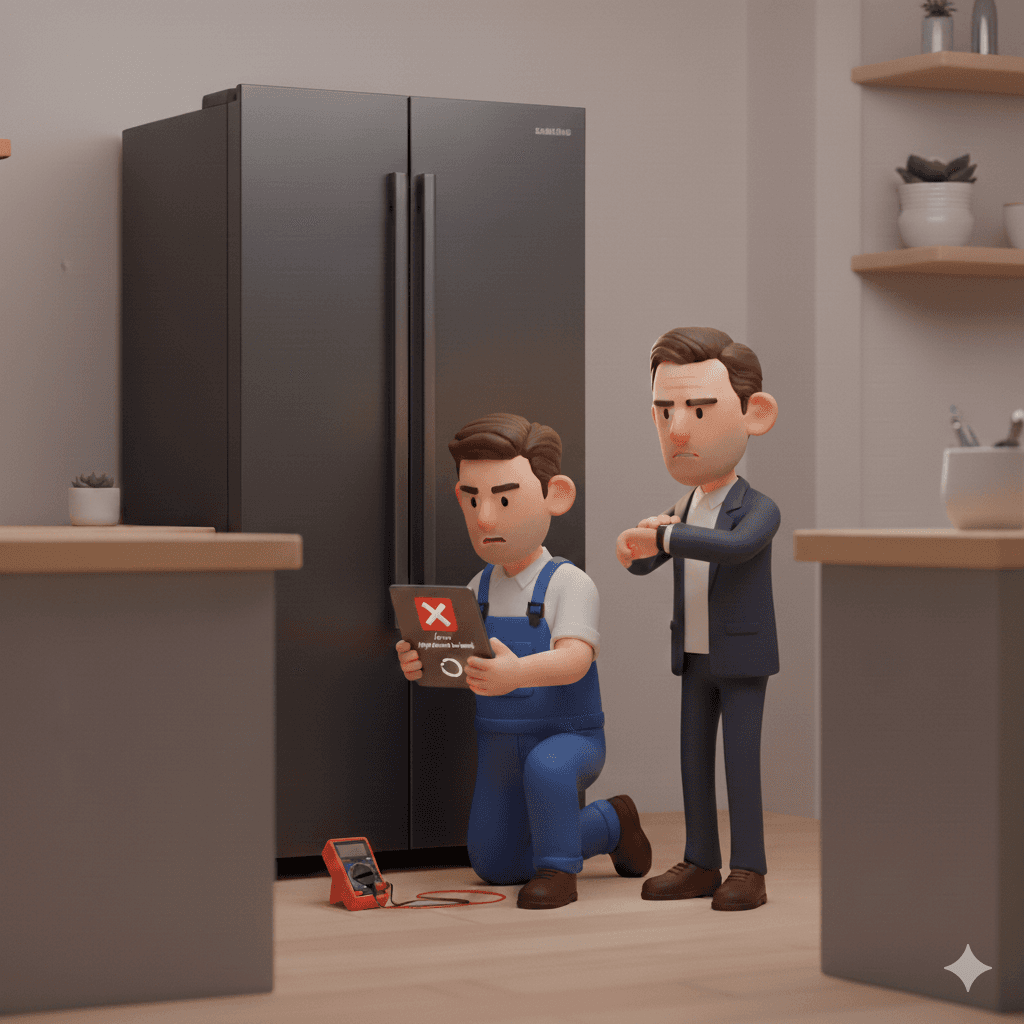
They are the "boots on the ground," often working in isolation in a customer's home. When they arrive, the "atmosphere" is already thin, the customer is frustrated, the appliance is dead, and the brand’s image is on the line. They need their tools to be their lifeline.
The Digital Maze: Open the HASS app → Wait for the "Loading" spinner... and wait → Navigate through 5 disparate tool silos → Realize the app crashed because of low signal.
Too much struggle! Mark is drifting, and the customer’s trust is leaking.
The Struggle: The Memory Game: Search through the void of 3 years of memory → Try to find a signal in the noise of 50+ fragmented tools.
This "Information Latency" swallows productivity. It strips the engineer of their expertise, leaving them drifting in a state of anxiety and confusion right in front of the customer.
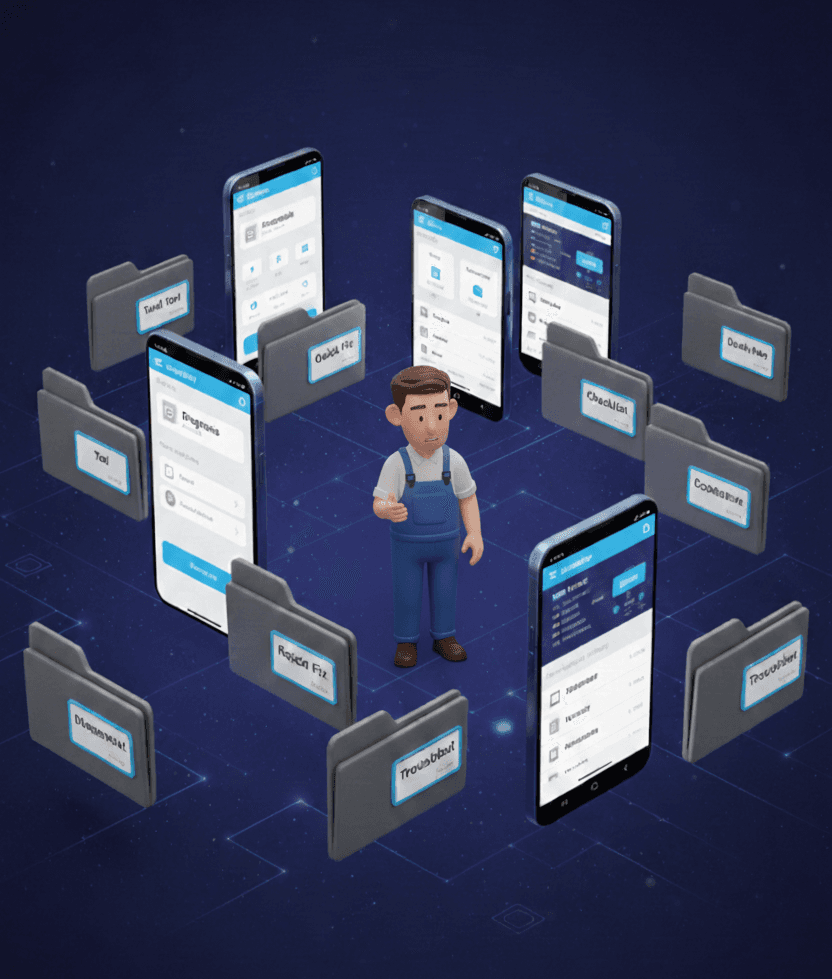
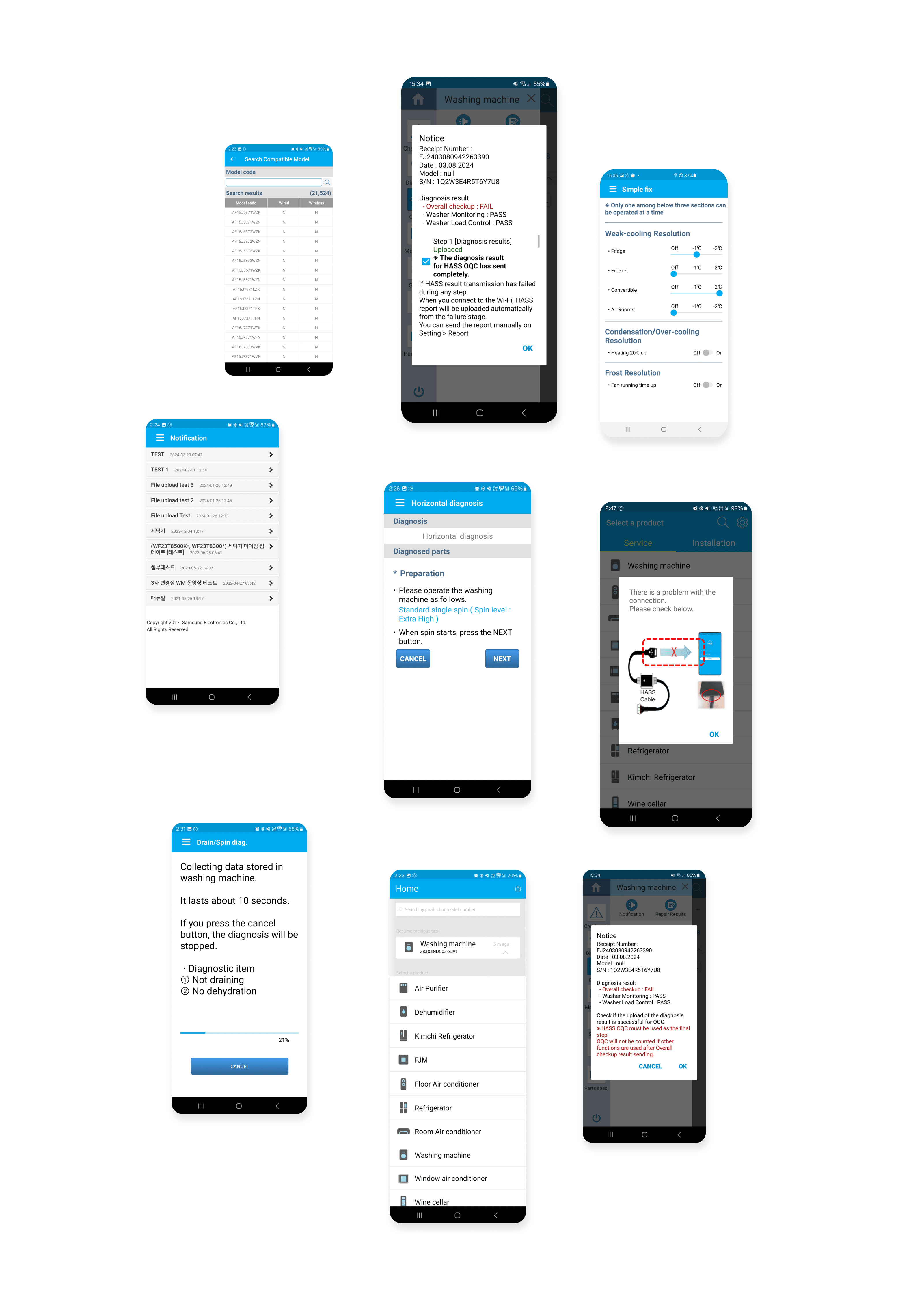
When we opened the app for the first time, what we found wasn't a broken product. It was an abandoned one.
Engineers had long since stopped trusting it and built workarounds — unofficial systems, manual notes, peer-to-peer calls — just to get through a service visit.
The app existed. It just wasn't being used the way it was intended. That gap between what the system expected and what engineers actually did was where the business was hemorrhaging money
The first thing I did wasn't design. It was alignment.
I initiated multi-stakeholder meetings to map the full scope — not just what needed to be fixed, but why it had broken down, who owned what, and what success would actually mean to a CFO watching the P&L.
The mandate was absolute: transform a failing legacy infrastructure into a high-velocity ecosystem with zero seconds of downtime.
A radical overhaul risked paralyzing the entire global service system.
A failed migration wouldn't just repeat past financial losses; it would trigger a total collapse of technician trust, effectively grounding the workforce.
Unify the global teams across SDD (Design), SRI-D (Dev), and HQ (Seoul).
We had to move from 50+ fragmented leaks to a singular, resilient "Oxygen Supply" - the new HASS framework.
Without that shared clarity, a team can't move with conviction.
Everyone needed to understand the seriousness of what we were being asked to do — and own it.
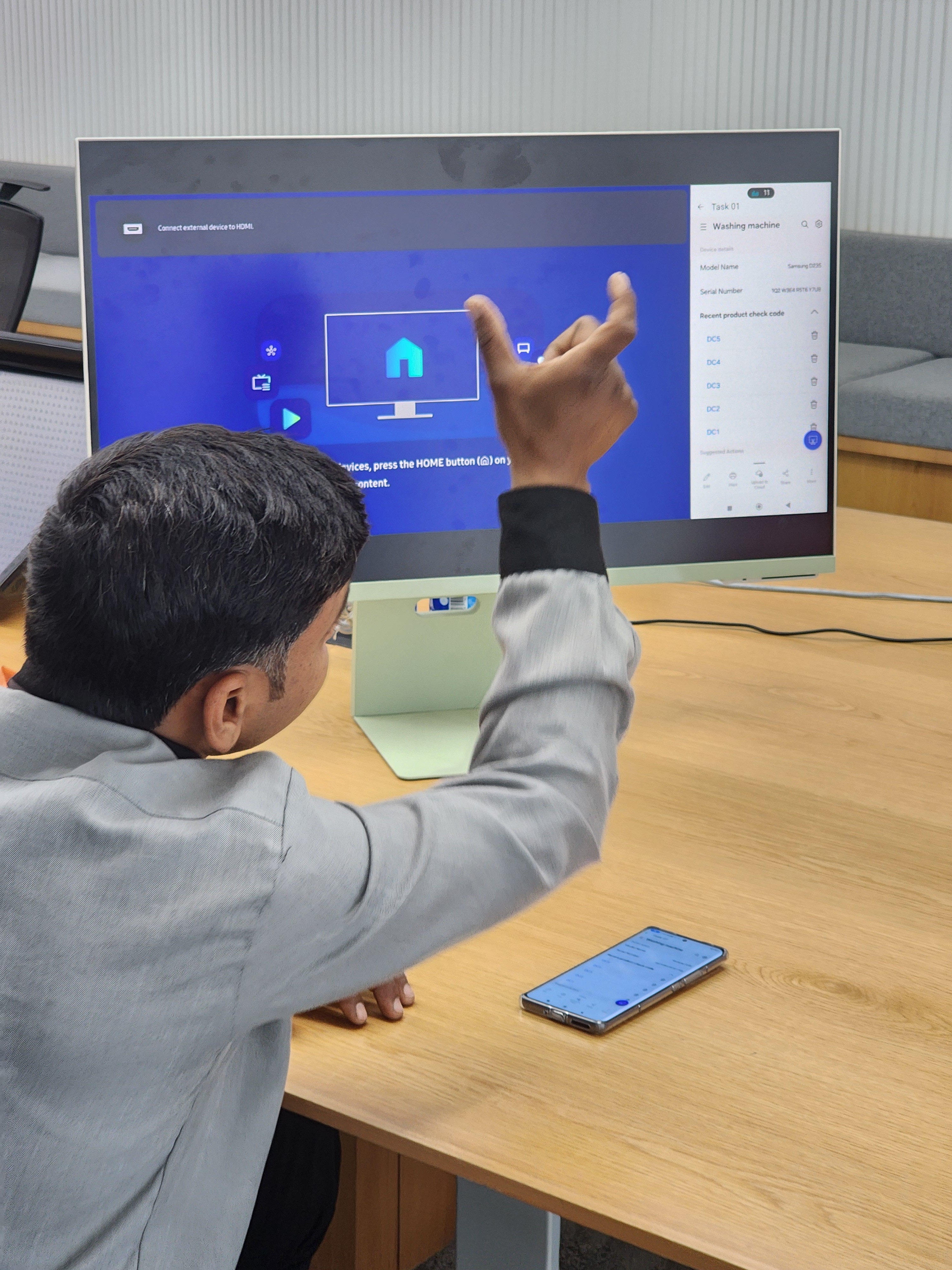
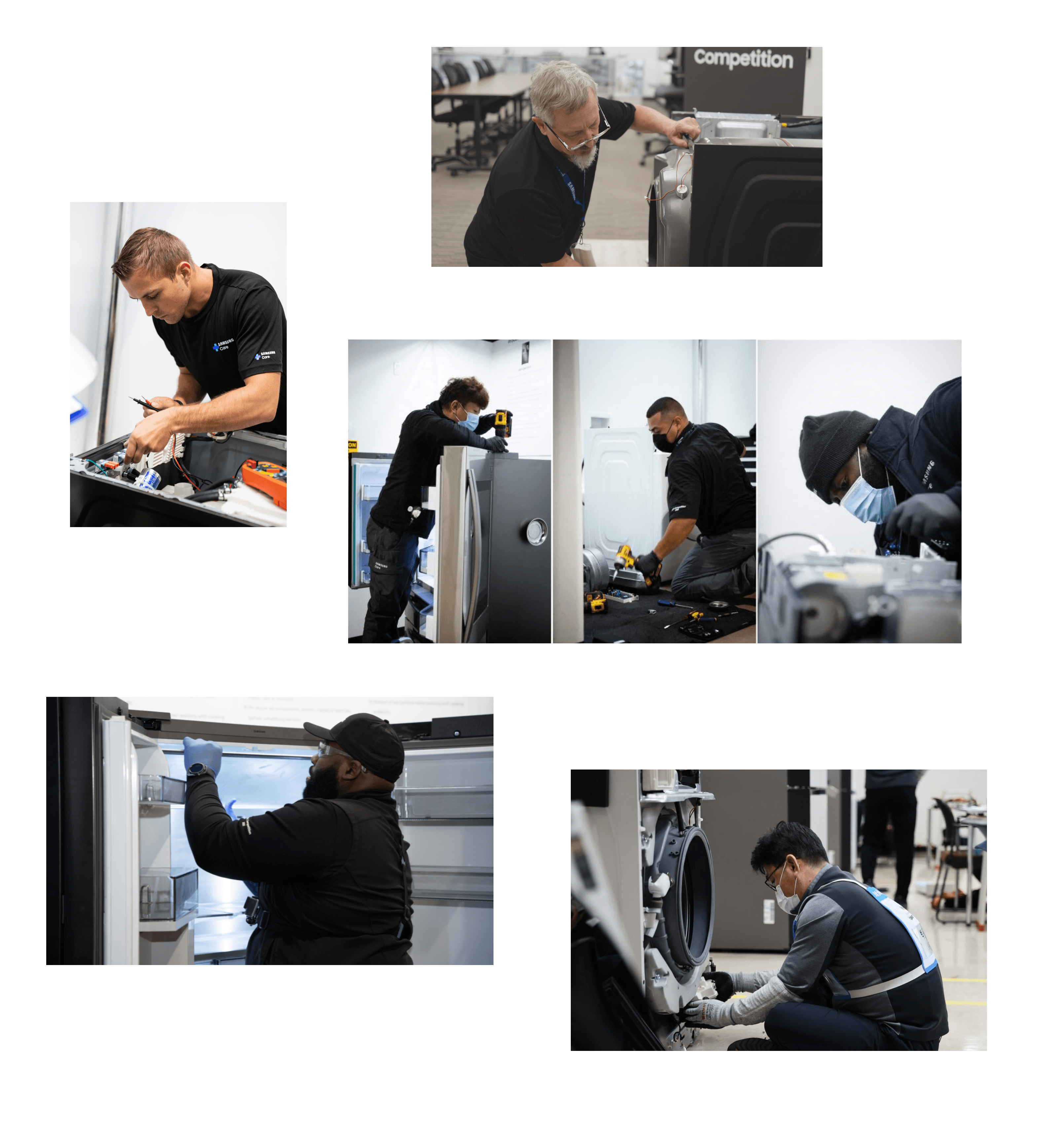
We conducted in-person usability testing & user interview with 5 experienced service engineers in Delhi NCR — 5 to 10 years of HASS experience, a mix of generalists and specialists.
The method was deliberate: give them real tasks on the existing app, observe without intervening, record everything. Then analyse.
We looked at everything — flow logic, button colour, icon choice, error states, engineering faults.
Nothing was too small if an engineer hesitated on it.
Three things emerged that shaped the design direction:
Every engineer needed help at some point with the existing system. Not because they lacked skill — because the system gave them nothing to orient by.
Report submission uncertainty was the direct cause of revisits. No confirmation. No failure state. Engineers left homes not knowing if the job was logged.
Infrequent tasks broke completely. One engineer's last firmware update was in 2019. The system offered no help finding it. The file went to general phone storage and disappeared
We couldn't visit every country. The budget didn't allow for field research across 50+ markets, and the timeline wouldn't have permitted it anyway.
So I built a different strategy.
I convinced the PM that structured VOCs were non-negotiable.
We built the framework. Each market ran it.
Same questions. Consistent structure. Local execution. It gave us signal across regions without requiring presence in every one of them.
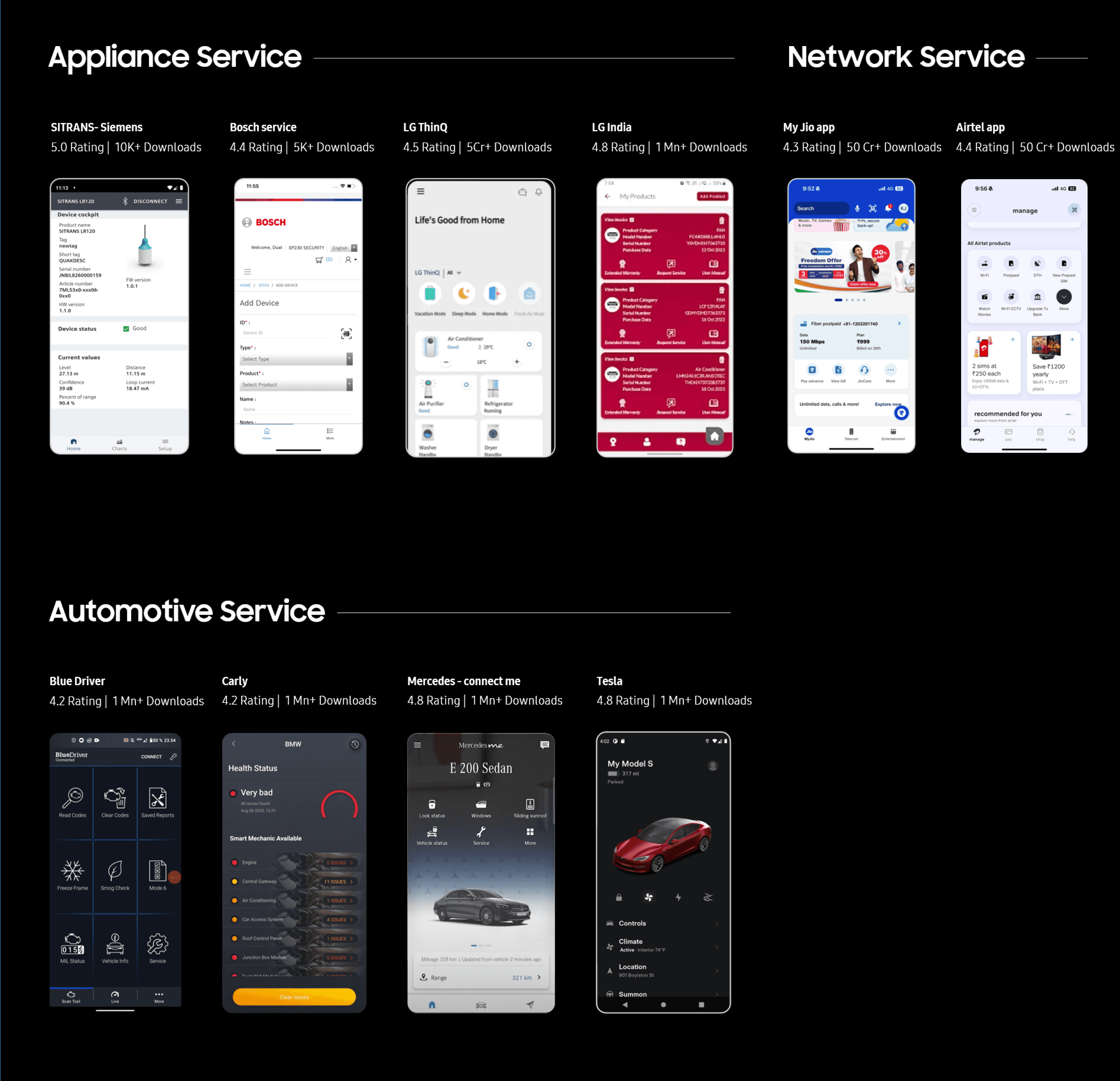
We studied 10 service and diagnostic applications across three verticals
Appliance (Bosch, LG, Siemens)
Network (Jio, Airtel)
Automotive (Carly, BlueDriver, Tesla, Mercedes).
Many redesign decision in HASS traces back to something observed externally:
Select a row to explore the design decision.
Key flows were selected through a structured prioritisation — team voting combined with critical workflow issue data. The highest-friction, highest-frequency problems went first.
From there, the process was deliberate: User flows → Interaction logic → Wireframes → Final screens.
Once designs were confirmed by the SDD Design Head, we handed off to development with a complete specification guide — nothing left to interpretation
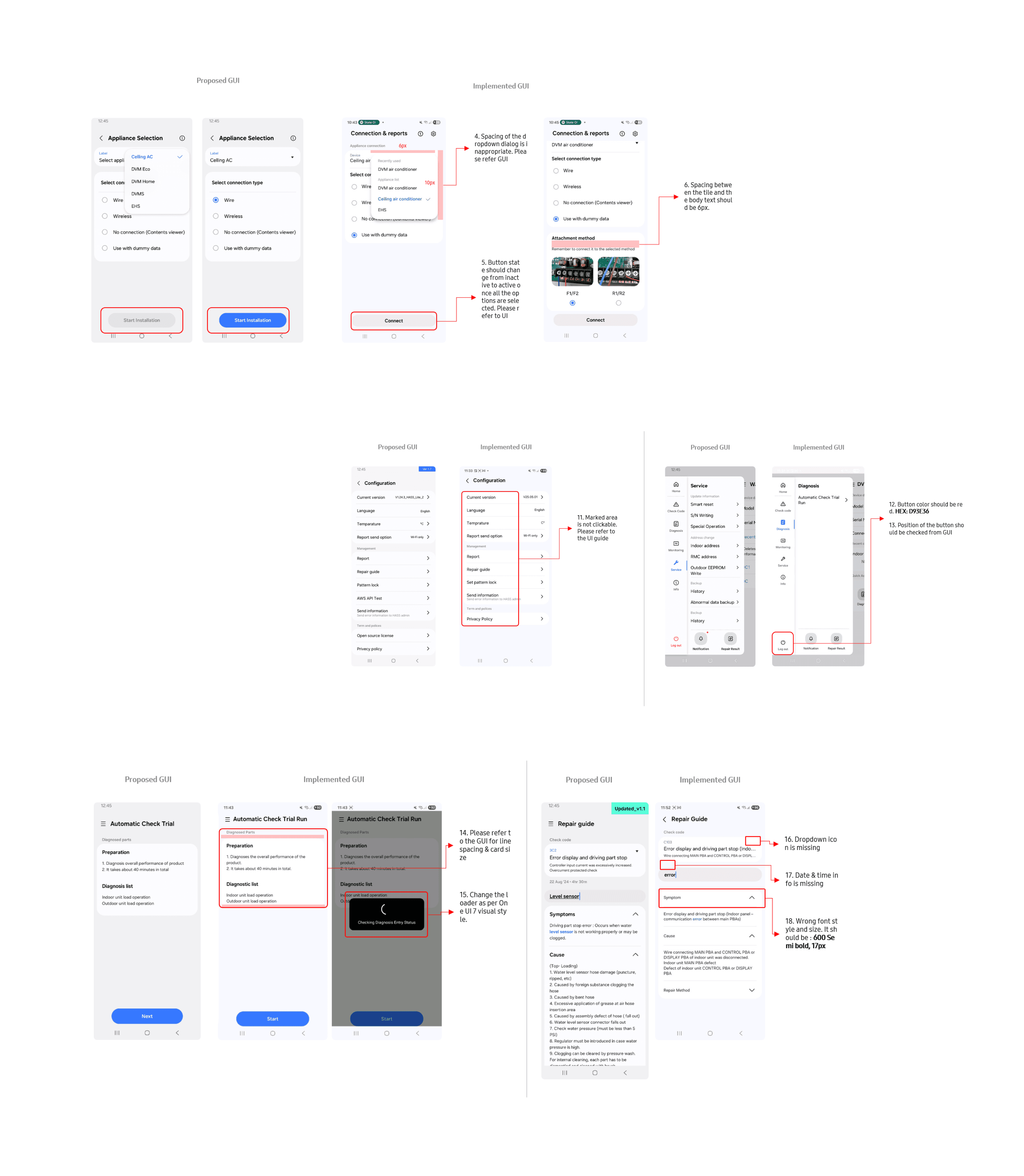
Continuous Feedback Loop: Implemented a weekly build audit cycle, manually flagging visual and logical inconsistencies in the live APKs.
Manual Sanity Checks: Acted as the human guardrail, providing pixel-level feedback to developers to ensure design consistency and prevent "Design Debt" during the migration.
We brought 10 service engineers into a structured session again: 6 real-world tasks on the newly developed app and a System Usability Scale assessment.
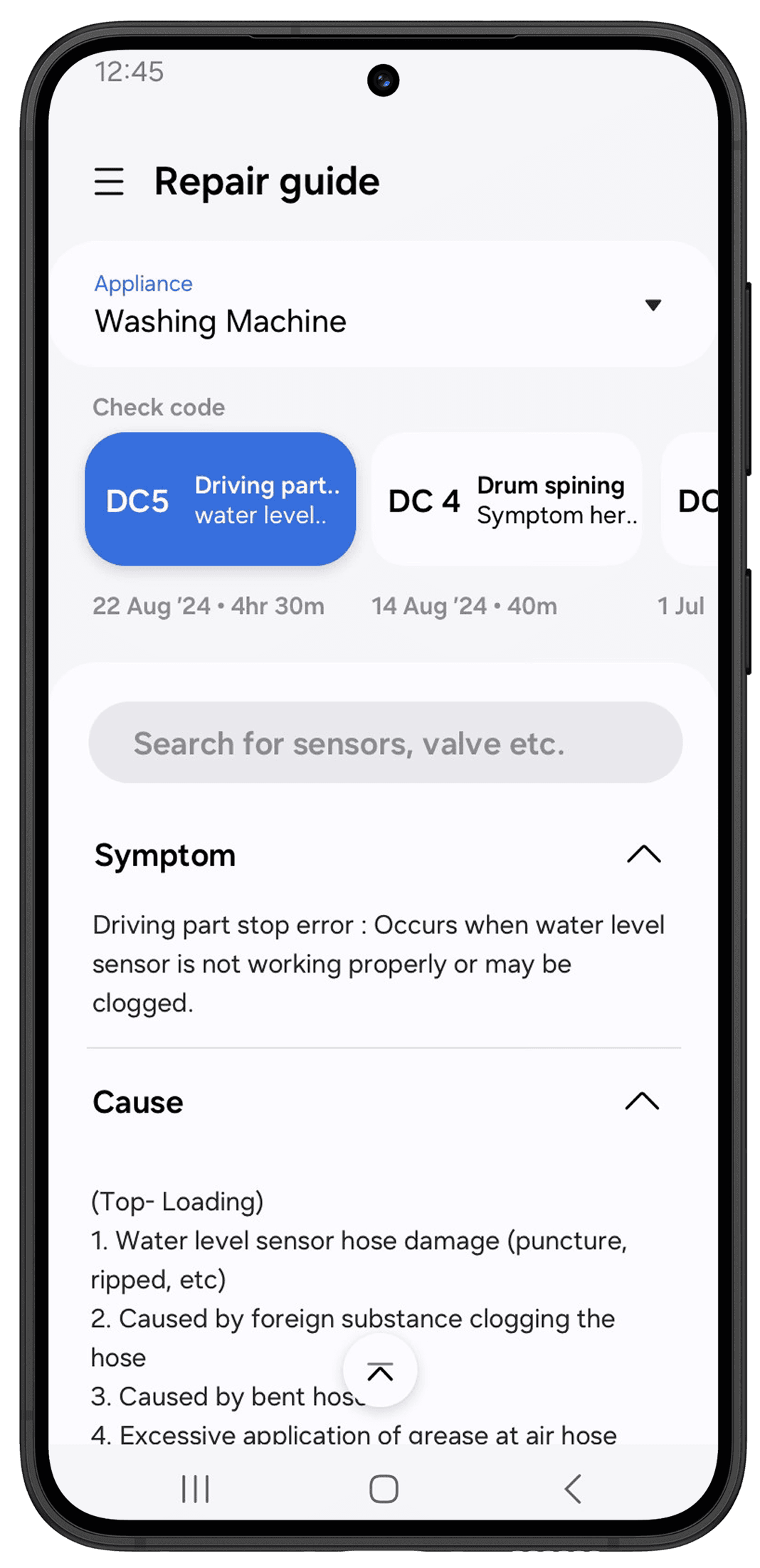
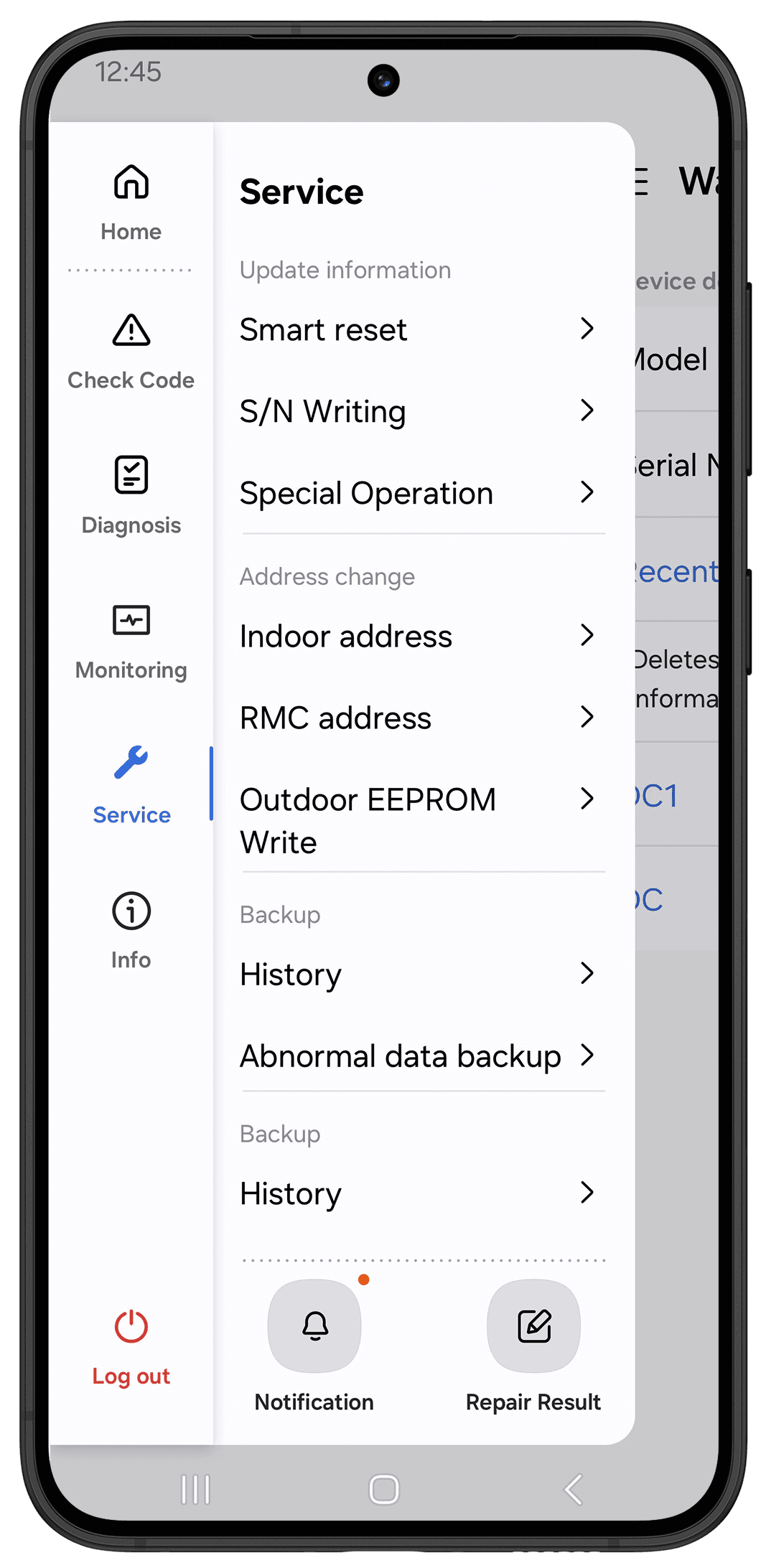
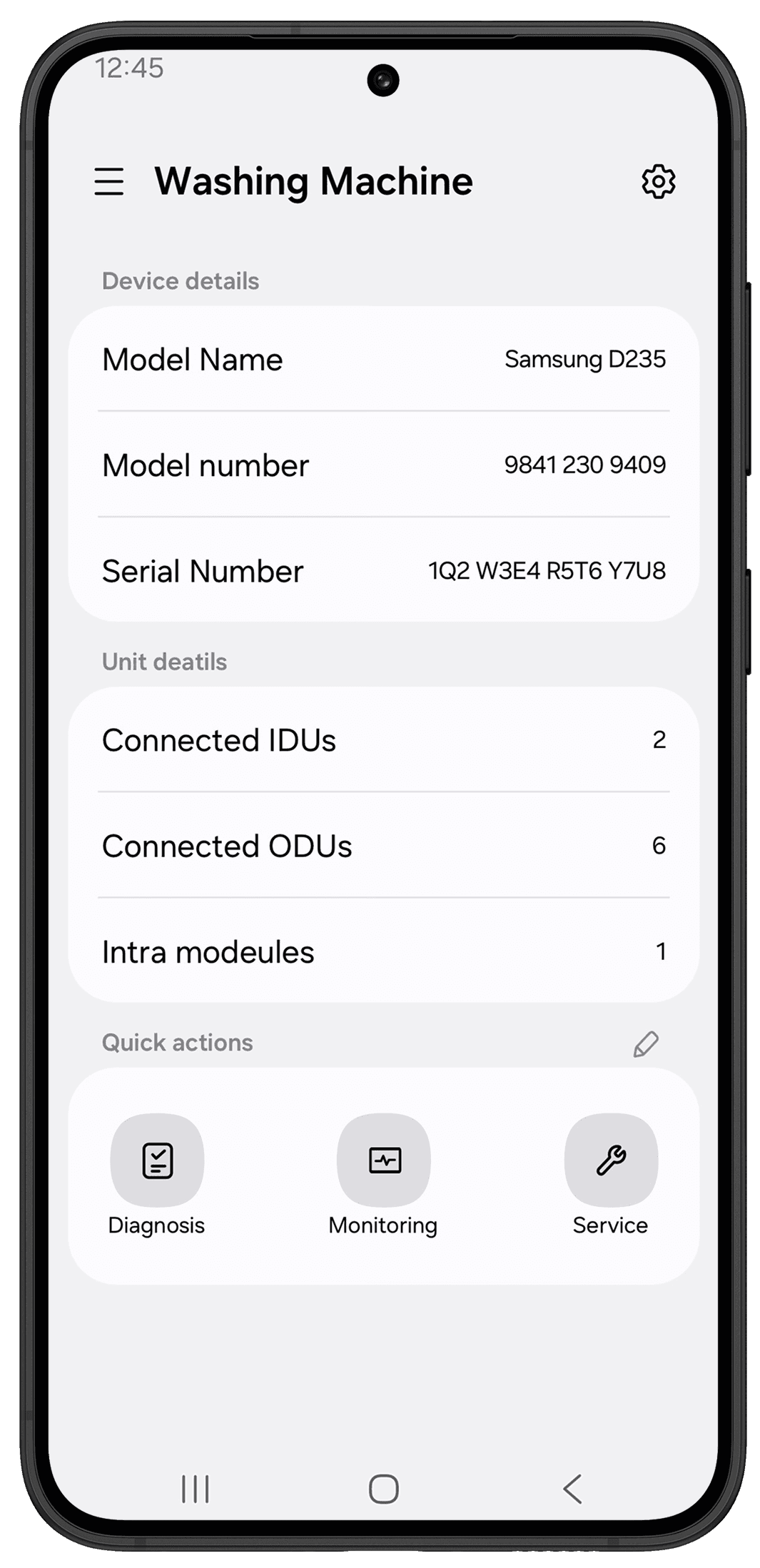
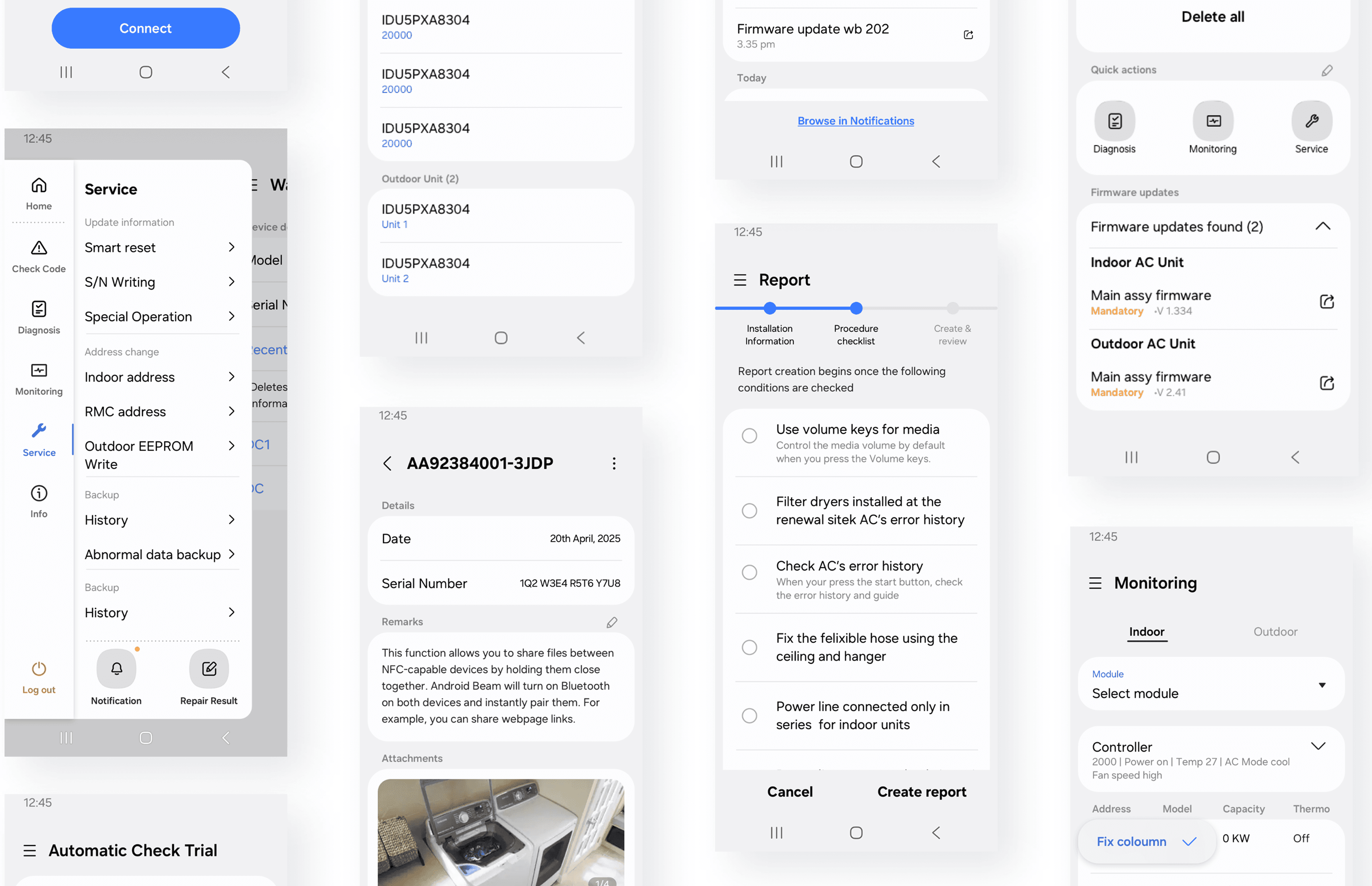
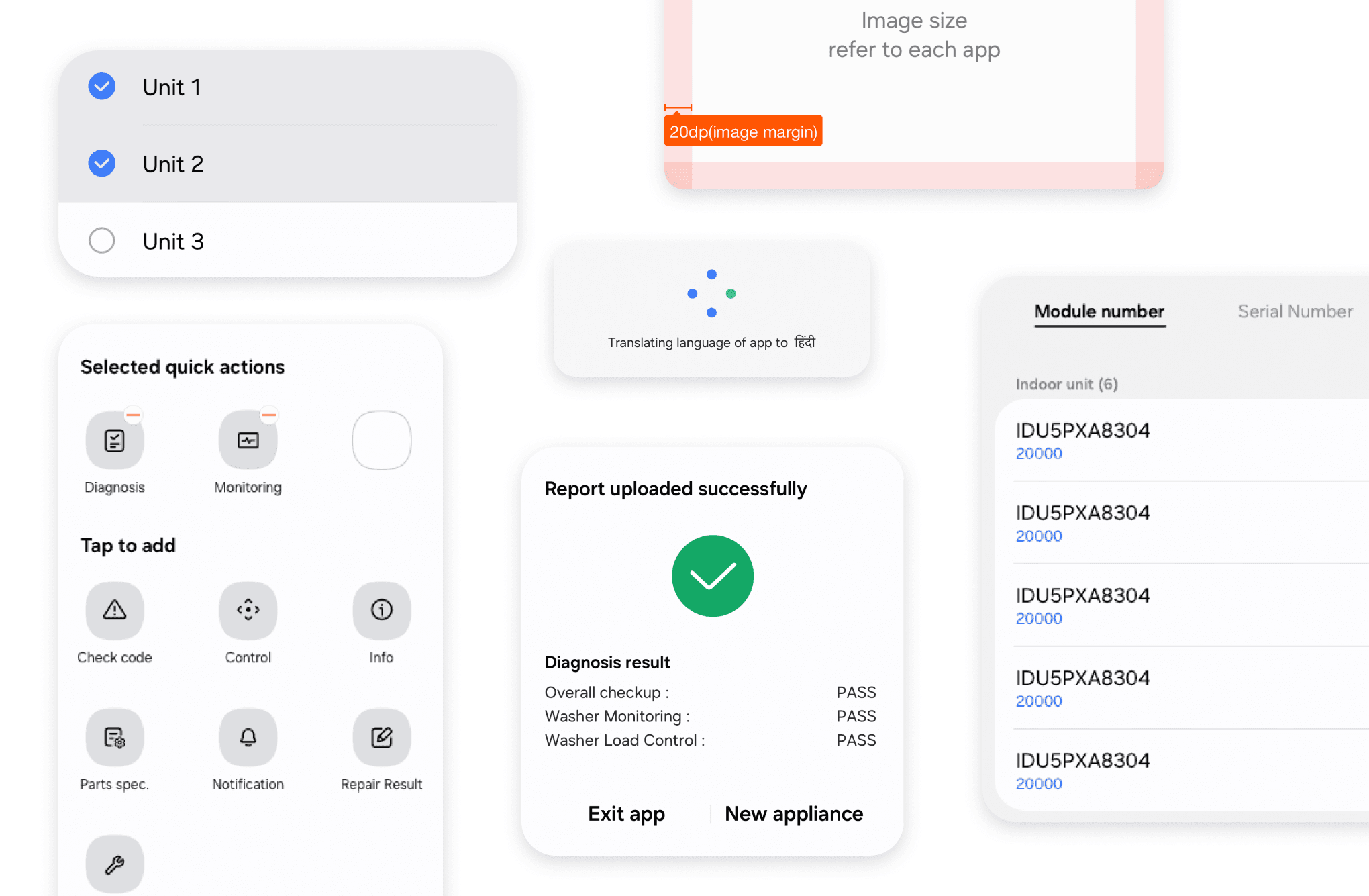
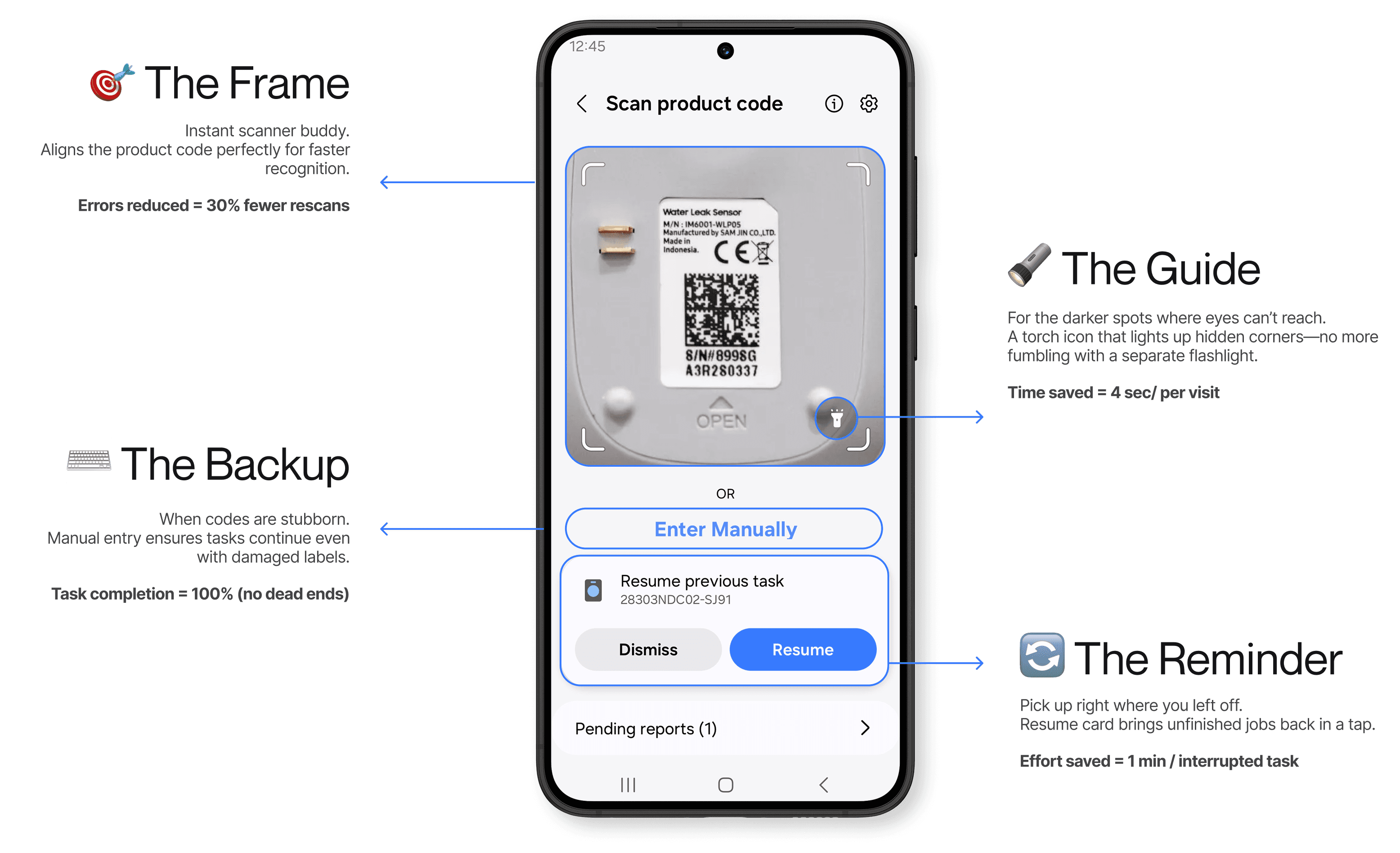
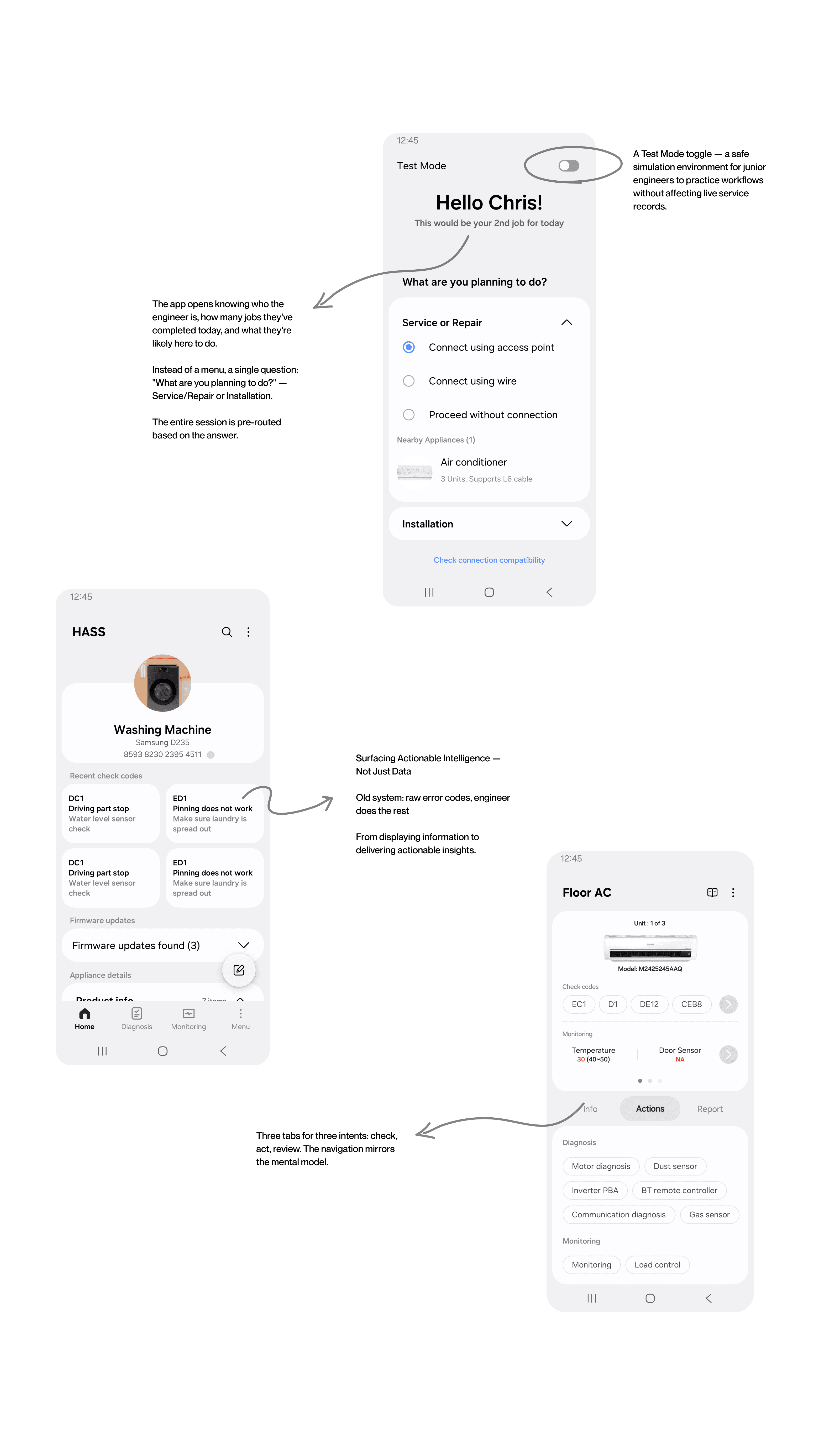
The foundation we built: Enterprise One UI — One UI adapted for field service. Glanceable hierarchies. Large touch targets. Single-hand navigation.
Friction Reduction: Reduced dev-design handover time
Metric: By Q4, we achieved $59K in immediate service cost savings, proving the ROI to the CFO.
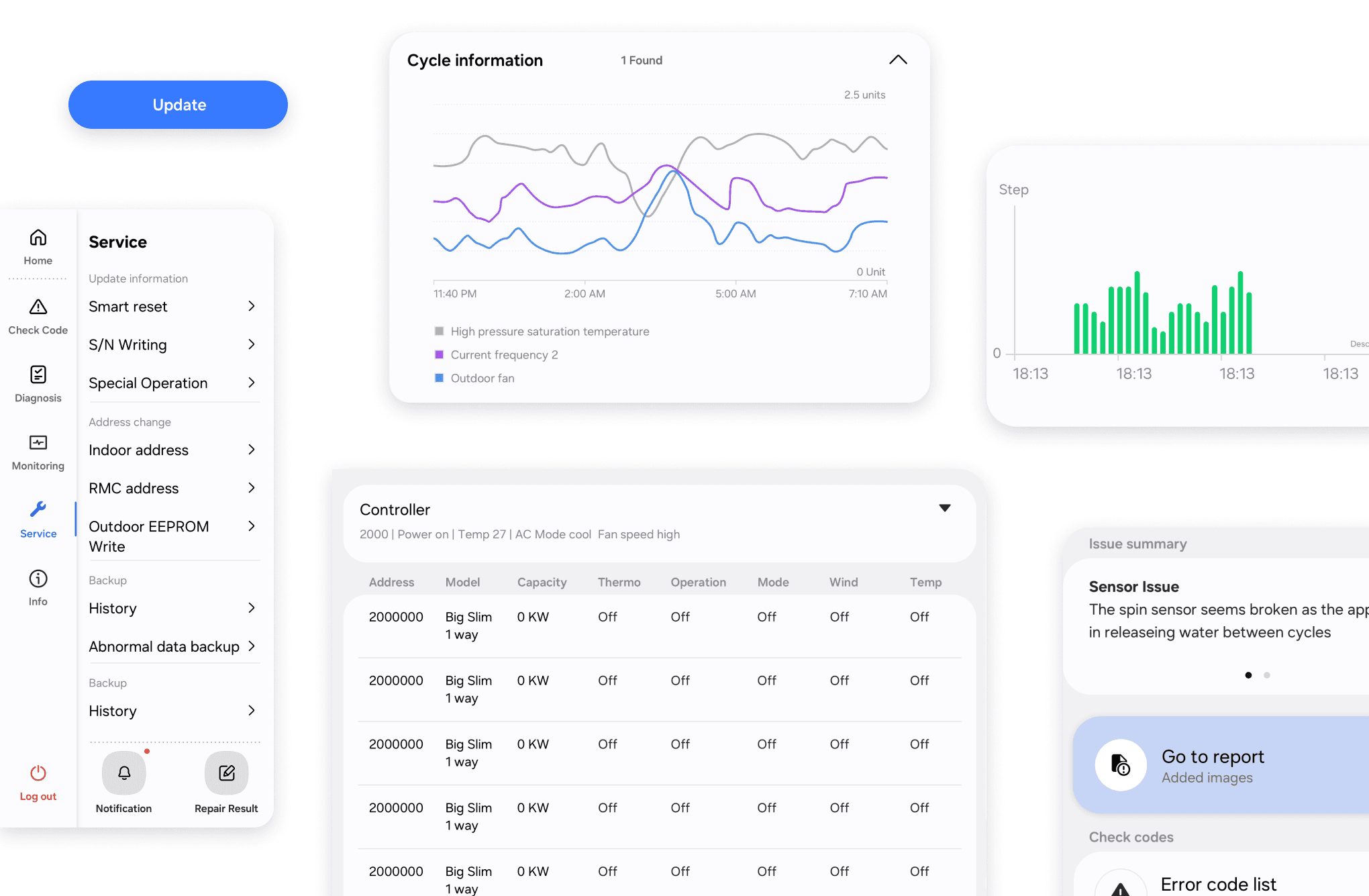
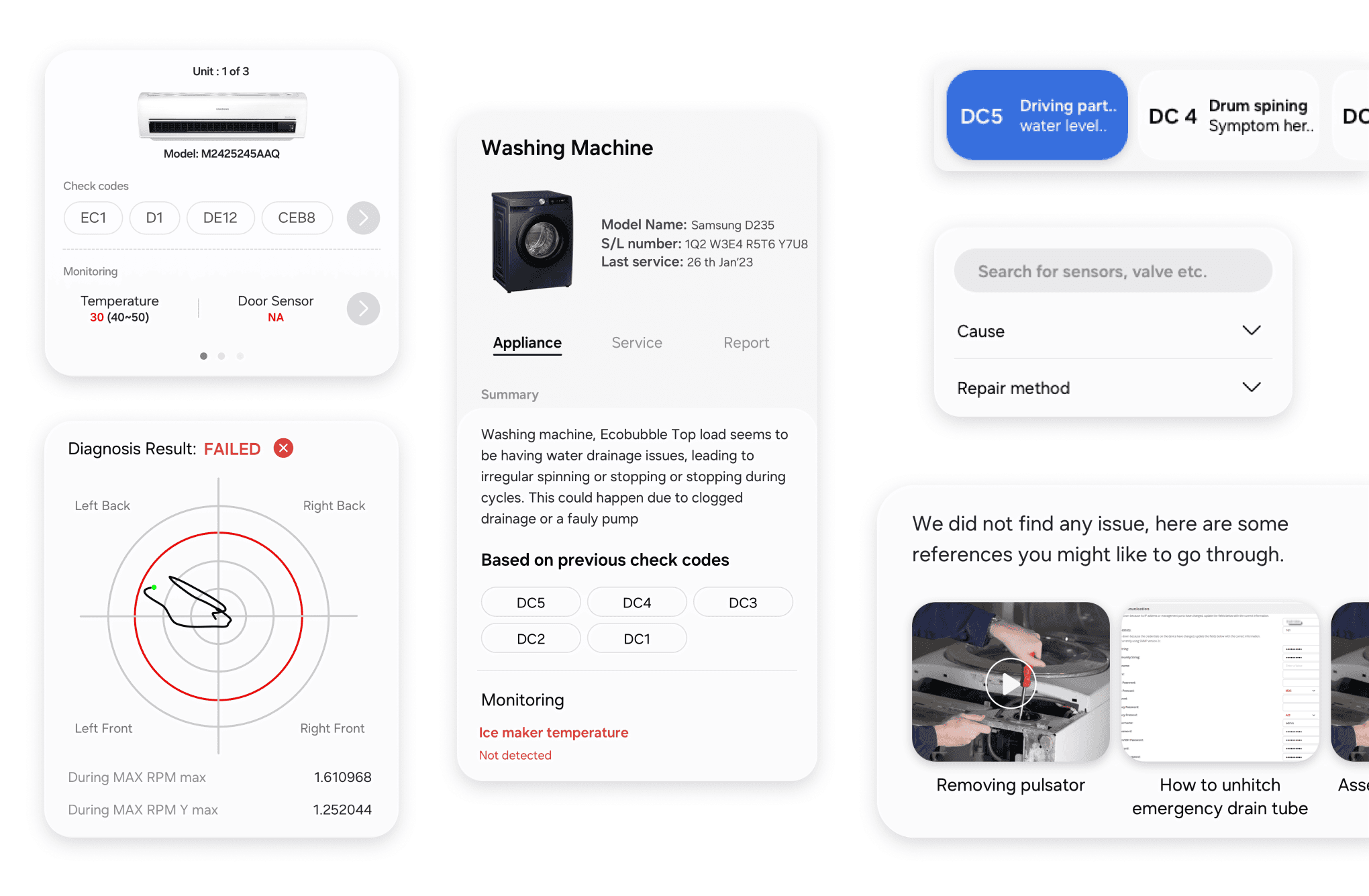
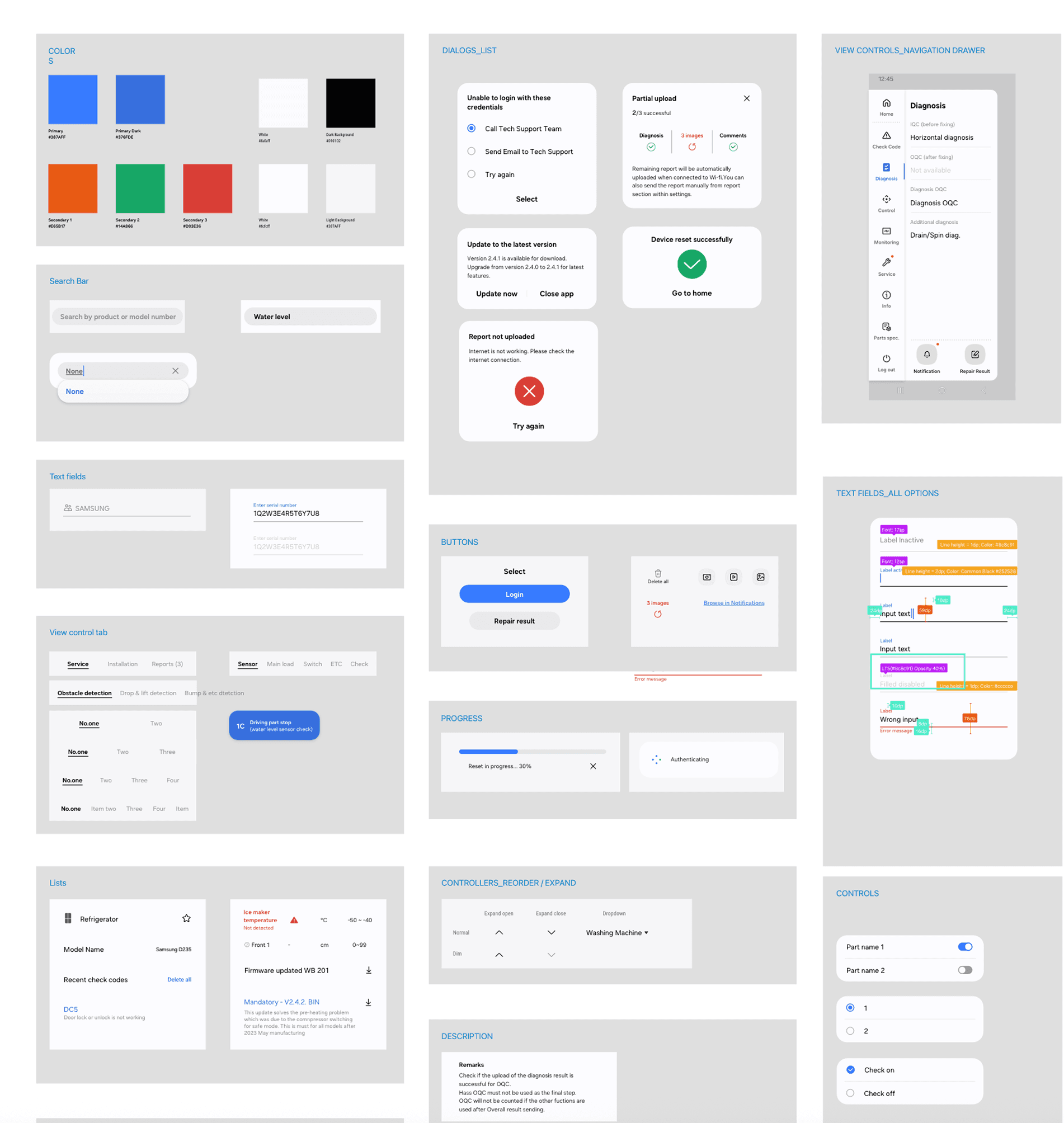
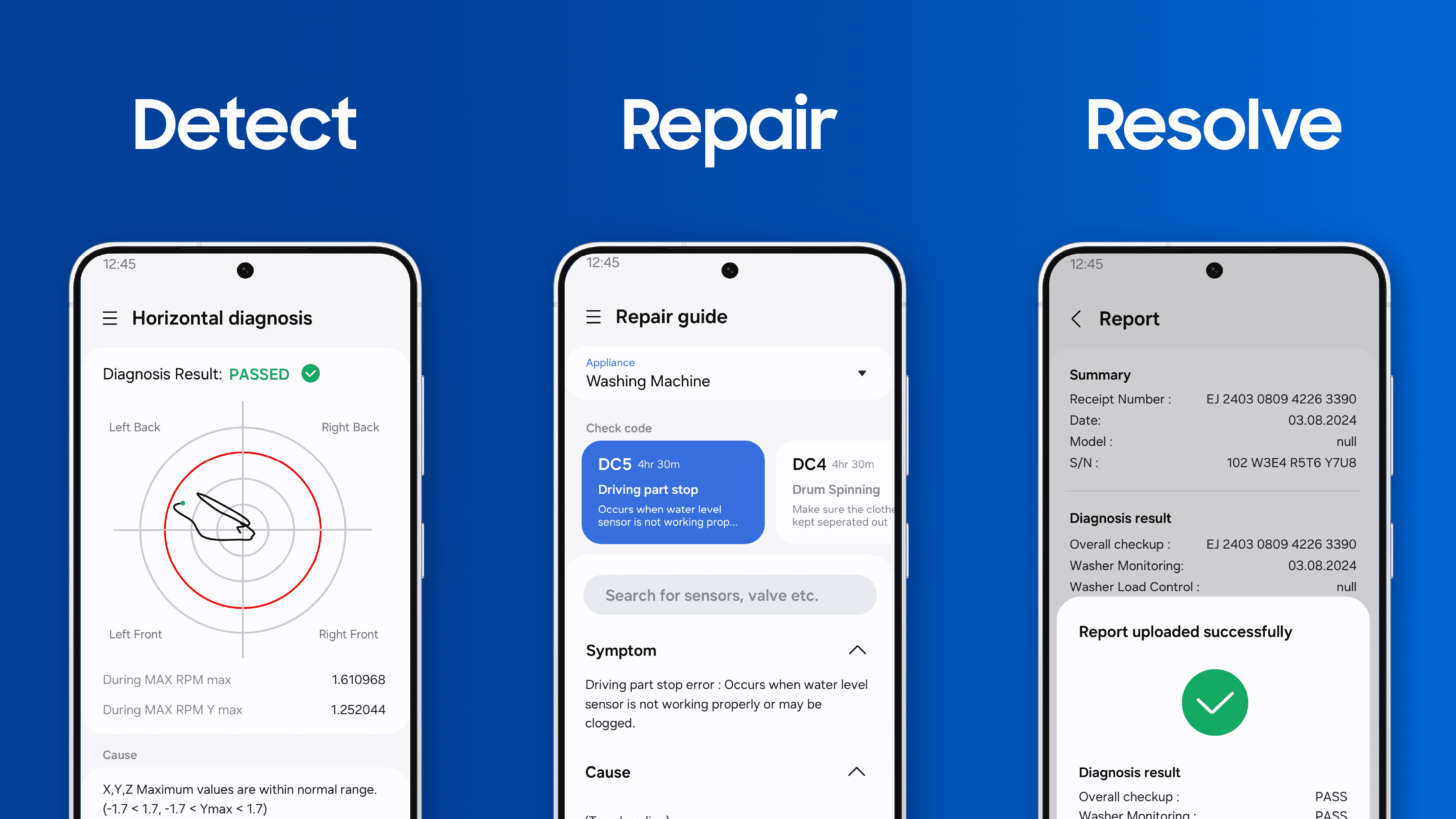
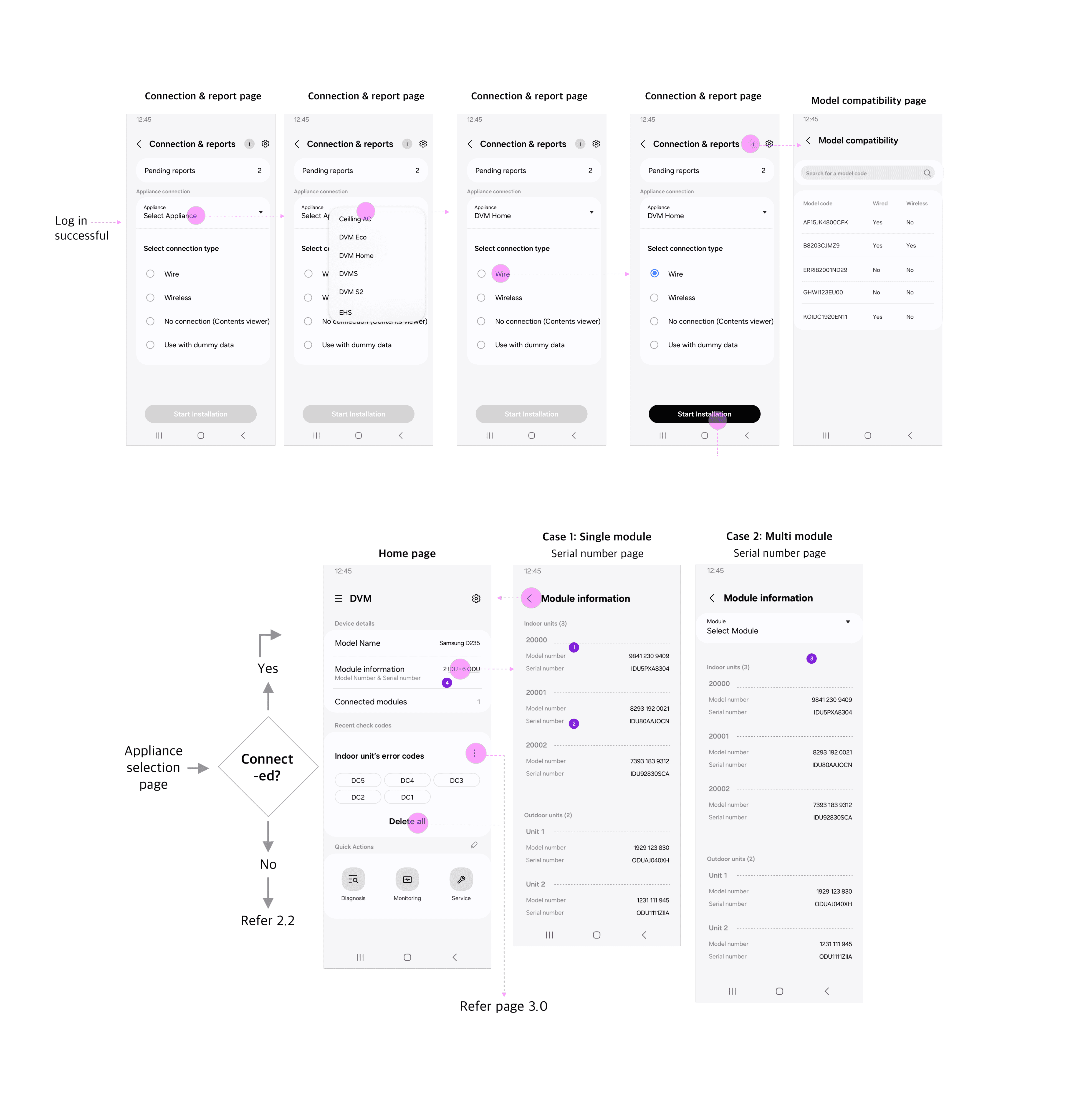
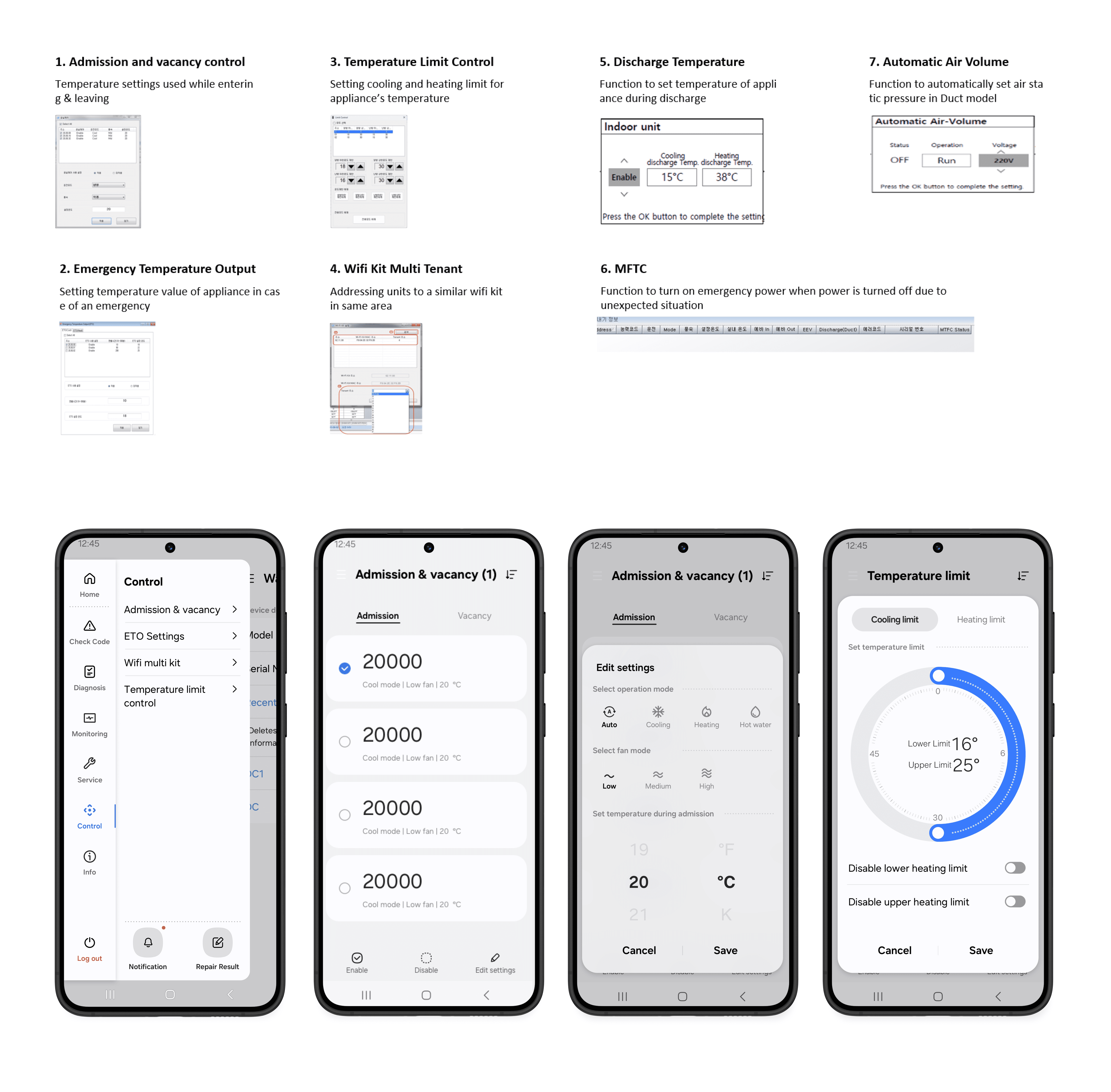
PC-to-Mobile Integration: We identified service engineers relied on heavy laptops for diagnostics of commercial AC systems. I led the integration of this complex PC software into the HASS mobile ecosystem.
Platform Scale: Expanded support to Tablet & iOS for broader field coverage.
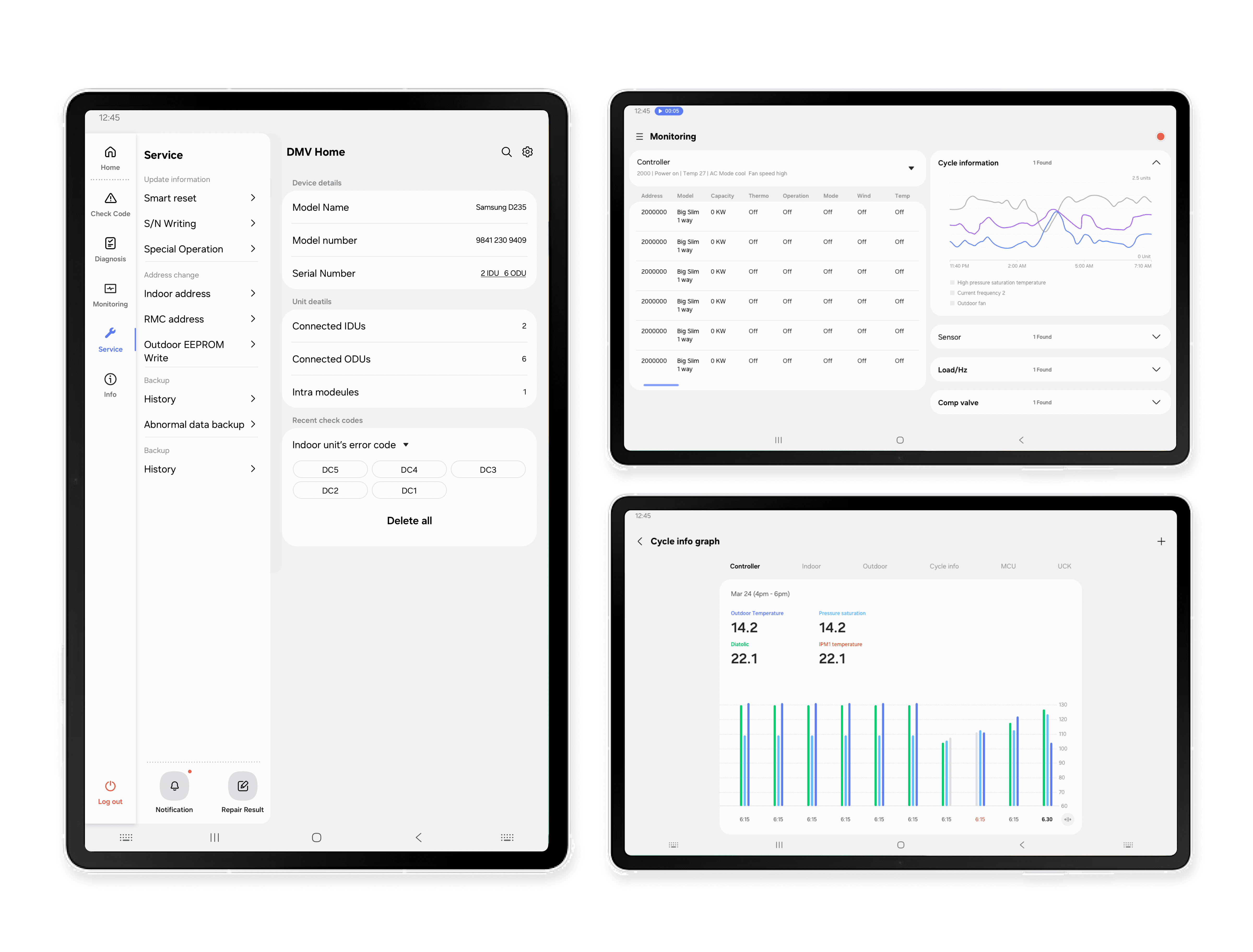
HASS is no longer just a tool engineers use. It is evolving from "just a tool" to one that watches, learns, and works with them, reducing cognitive load, unifying the Samsung service ecosystem, and making every field engineer feel like they have the whole organization behind them.
Agentic UX — Piloting AI that acts before you ask. Predictive Alerts flag likely faults before the visit begins. Smart Scheduling manages the engineer's workday based on proximity, specialisation, and history.
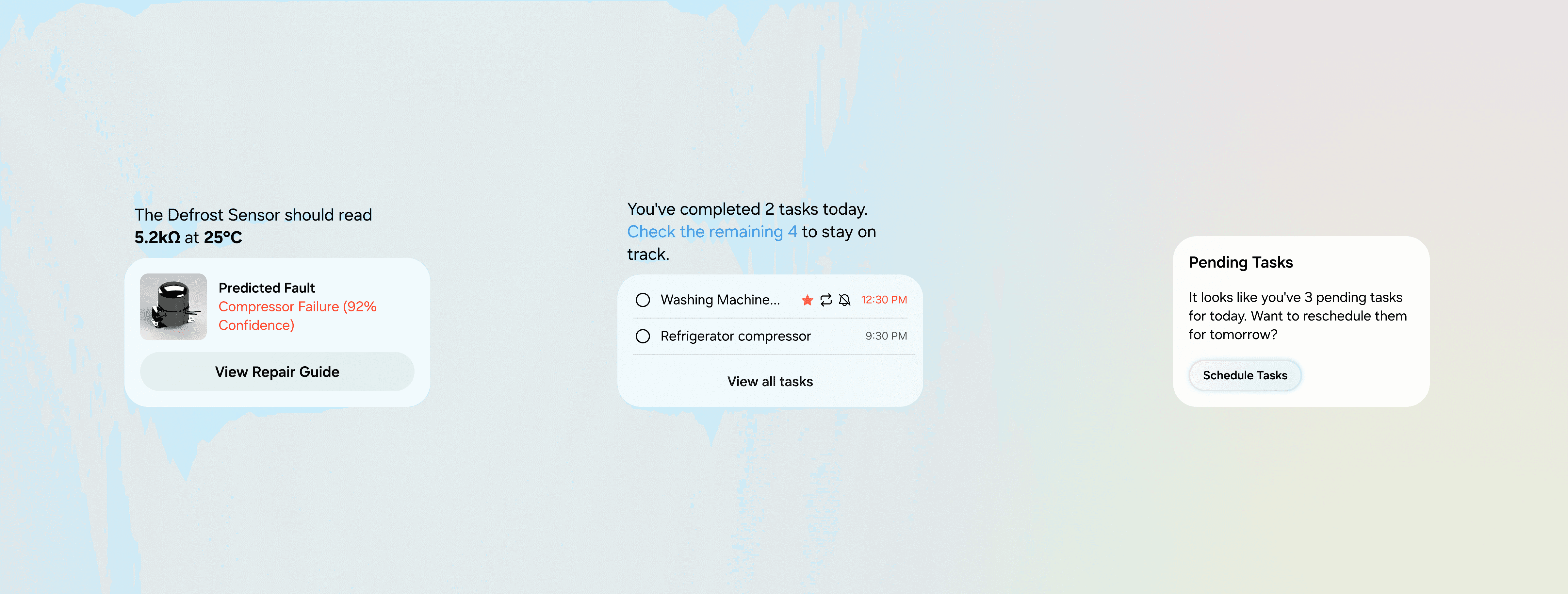
New Interaction Patterns — Exploring novel interaction models for field service — faster, more intuitive, built for the physical and cognitive reality of an engineer mid-job.
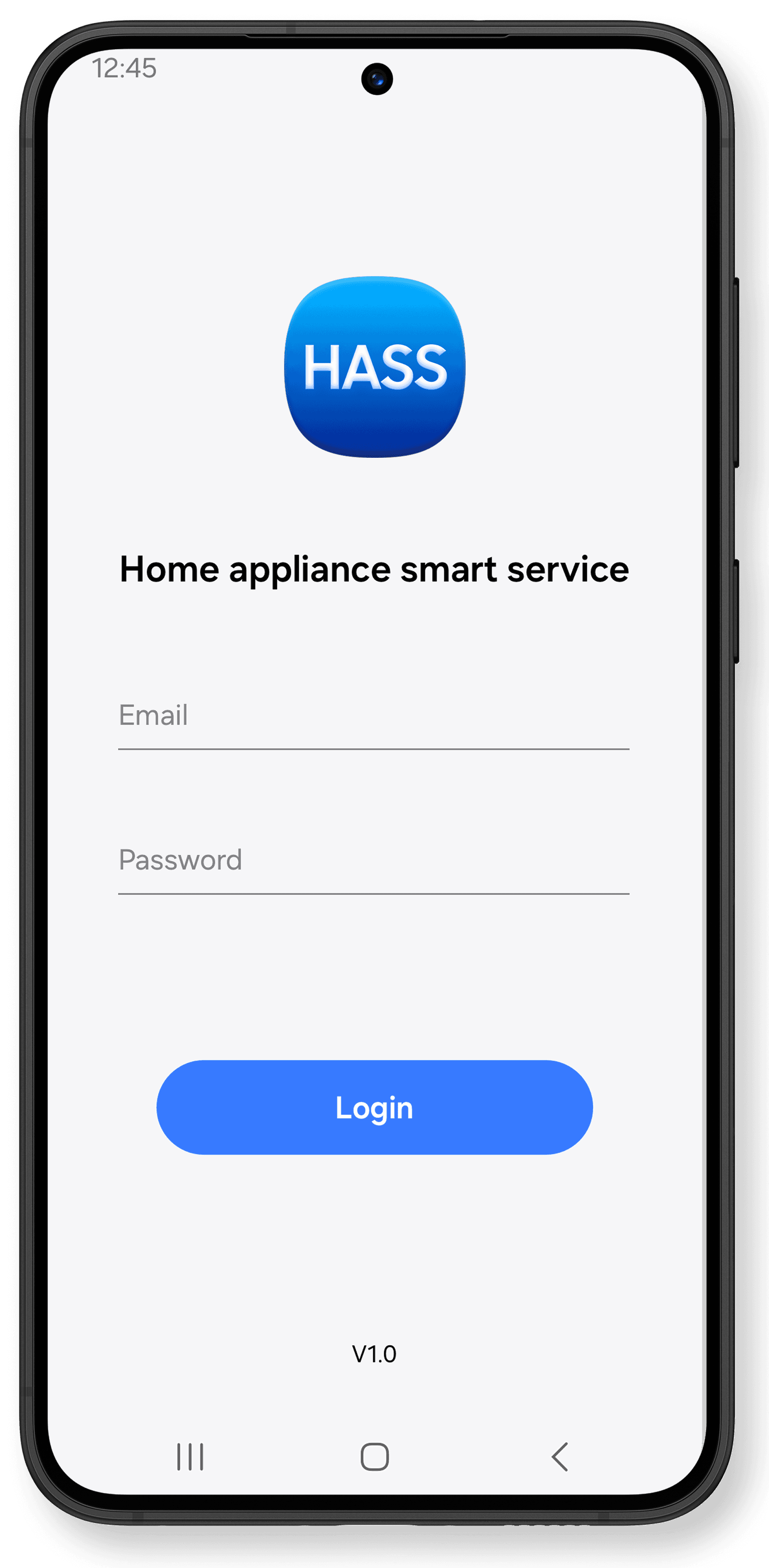
Visual Rebirth — Launched a new logo and identity to mark the shift — from legacy utility to modern intelligent ecosystem.