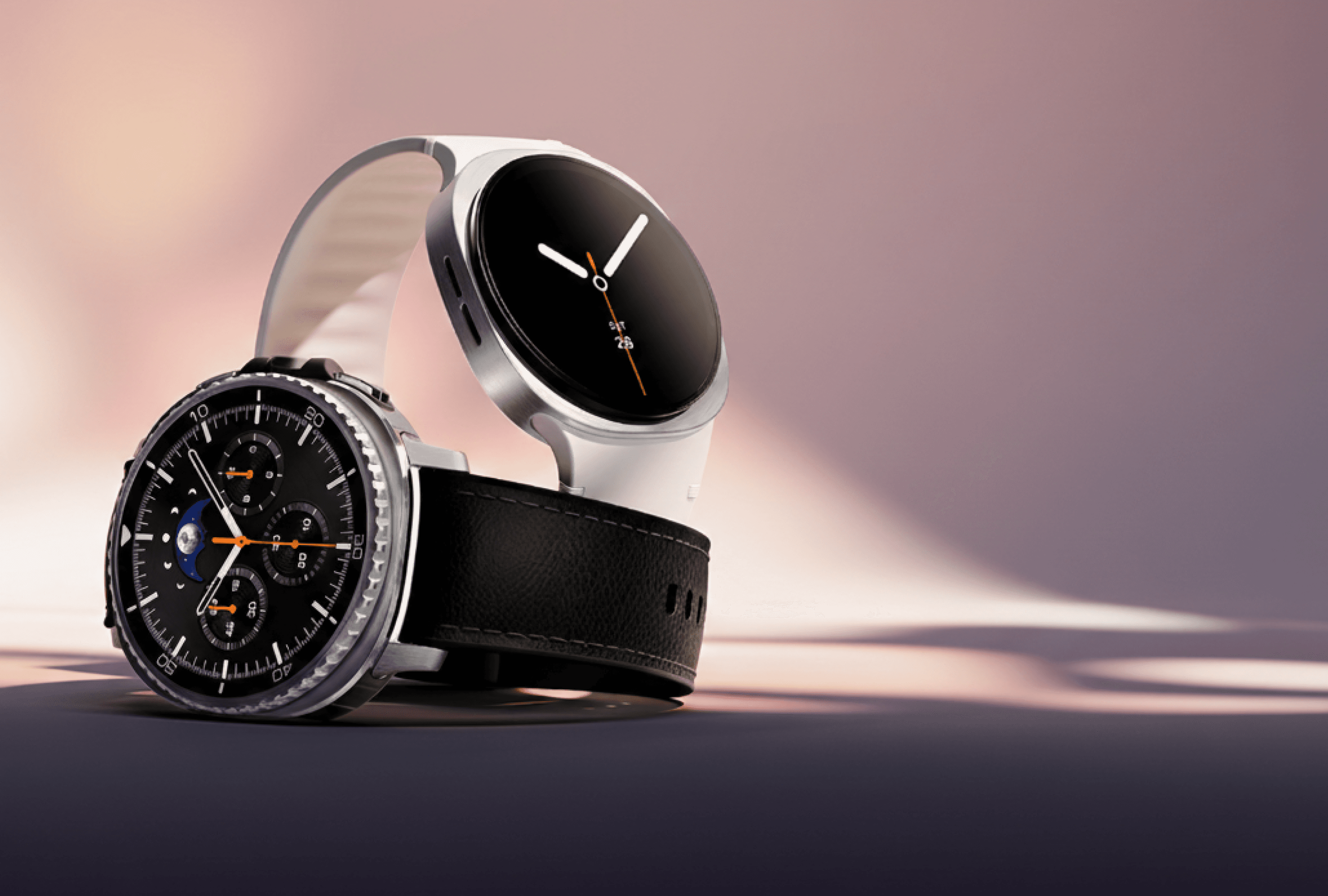
How do you design for a device that knows you, without making it feel like it's watching you?
How do you design for a device that knows you, without making it feel like it's watching you?
The Brief
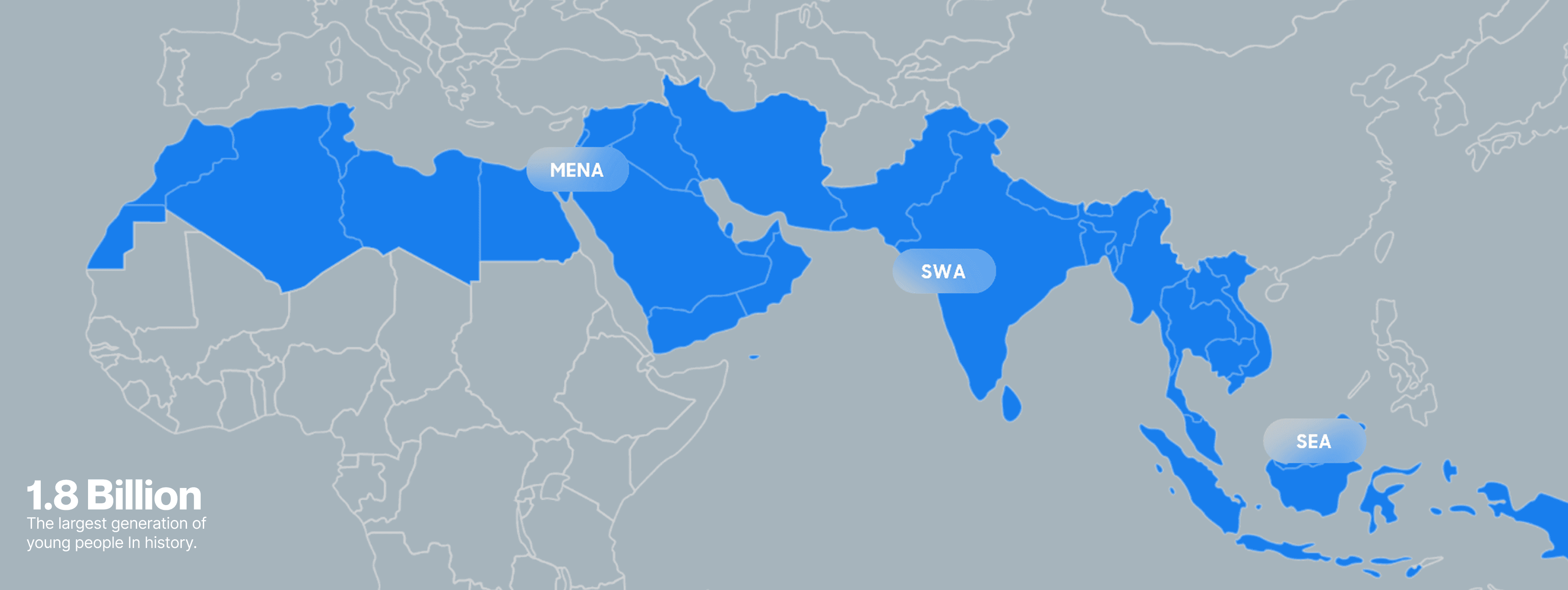
Late 2024. The brief arrived at Samsung Design Delhi as a single provocation: find AI-driven consumer experiences for South & South-West Asian markets. No brief. No defined problem. No predefined solution space.
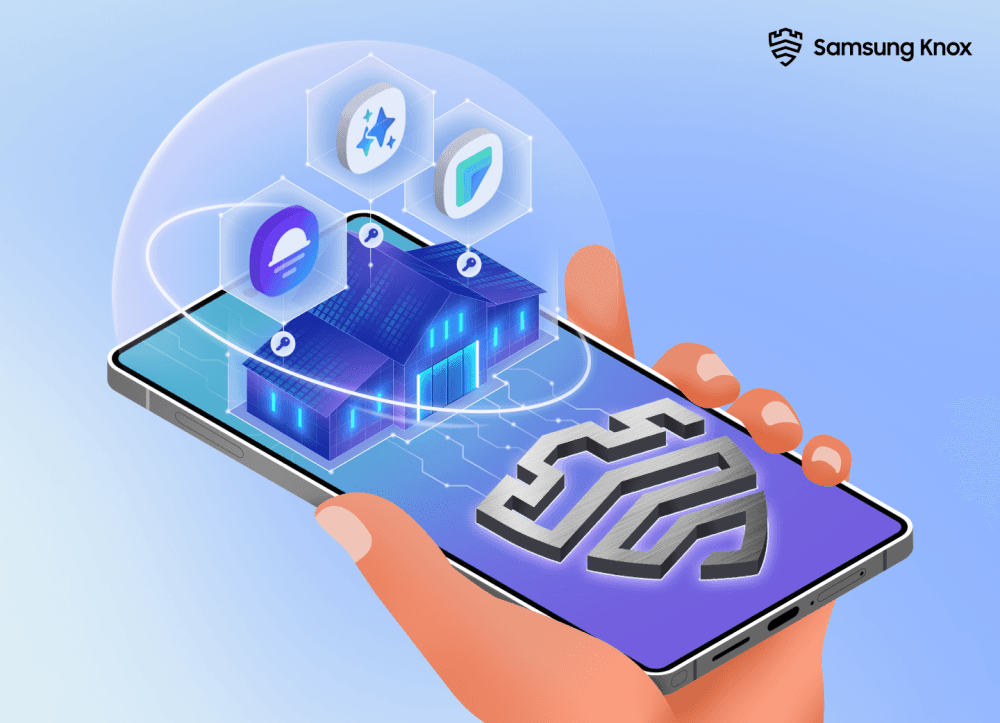
Just access to the most personal data layer in the industry — the Personal Device Engine (PDE), Samsung's on-device AI that builds personal context entirely on the device using , no cloud required — and a mandate to find what it should actually do.
That kind of open brief is exciting and terrifying in equal measure. The freedom is real.
So is the risk of spending months solving the wrong problem.
"We have the most personal data layer in the industry, and it never leaves the device. Your job is to find the experiences that justify it."
Research & Synthesis, Wireframing & protoyping, Final UX Guide creation, POC Video craetion
Team
3 Designers, Developement, Marketing, Business
Timeline
Nov 24 - Ongoing
Key Results
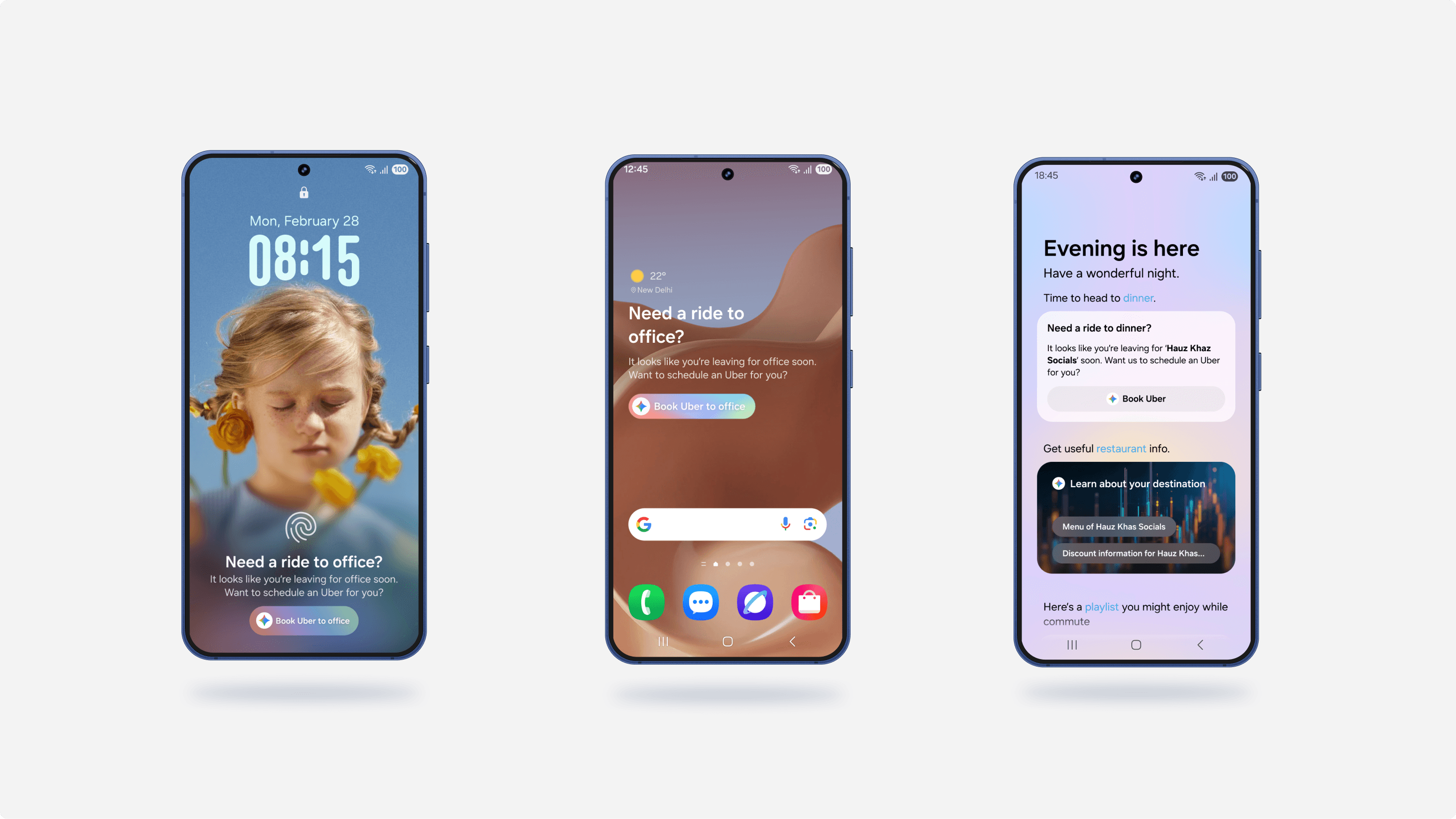
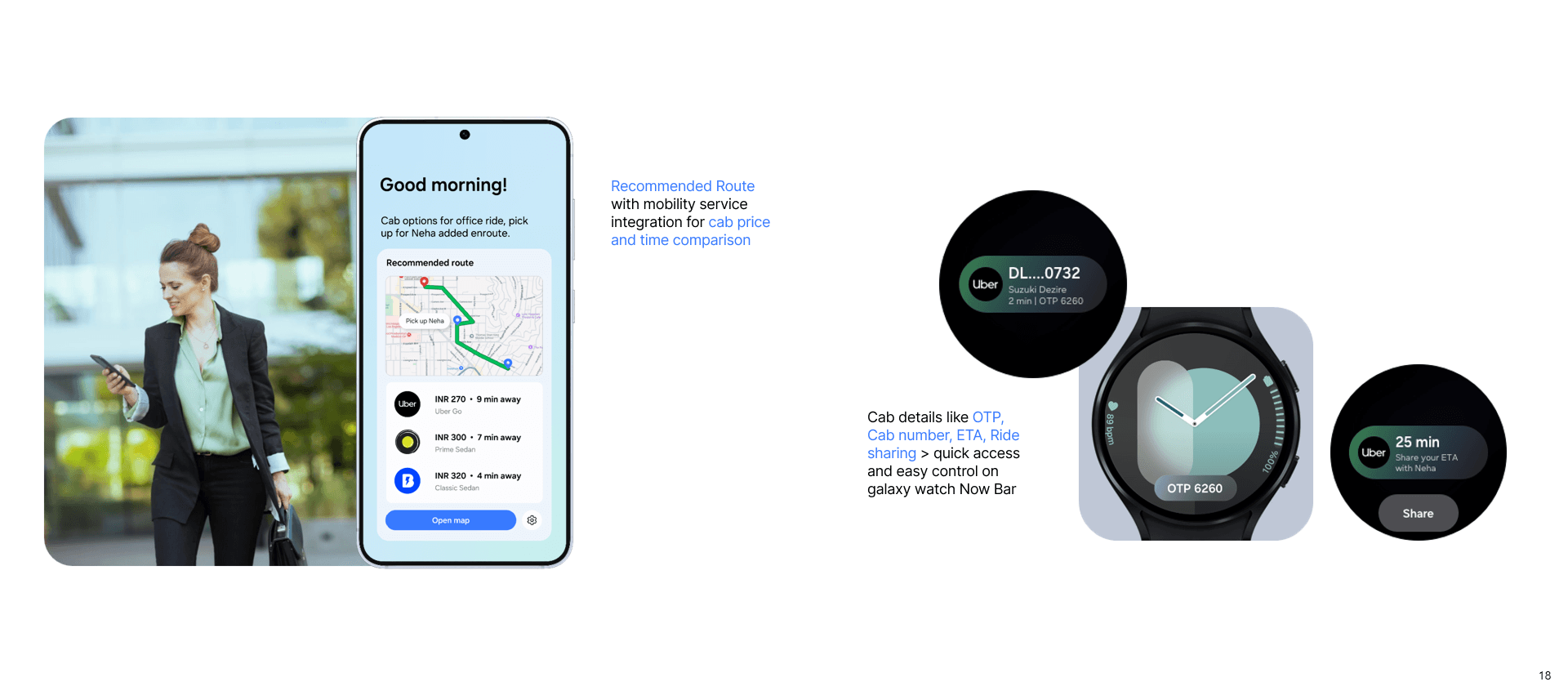
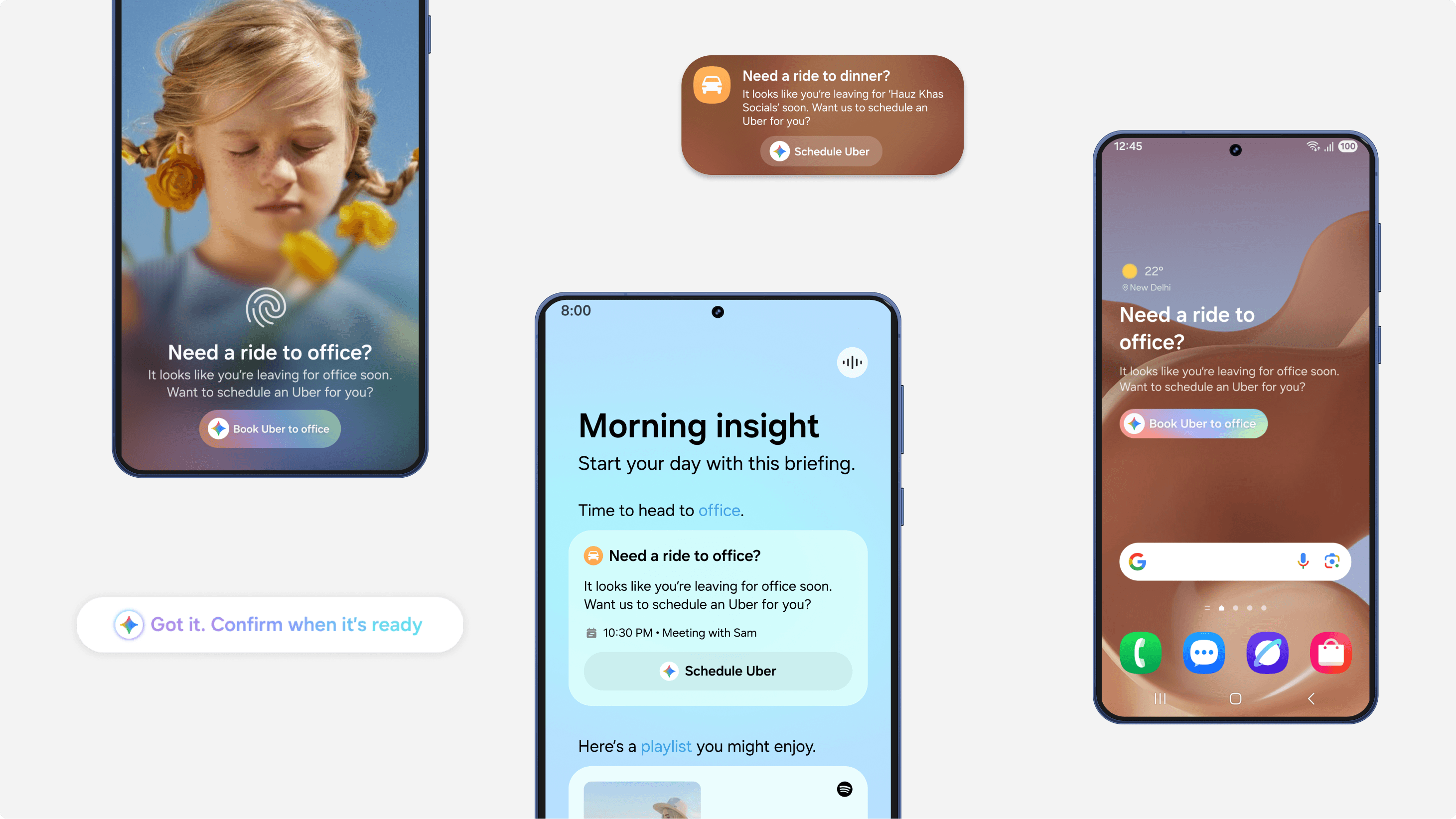
Cab booking Automation (Powered by Gemini) — Live on Samsung flagship devices
Finding the right problem
South Asian users aren't short on apps. They're short on coherence.
Every service works. Nothing connects. The coordination burden, across commutes, across devices, across the fragmented moments of a day — falls entirely on the user.
Which part of that burden is most urgent to solve for first?
Understanding the users
We started by mapping what users were actually doing with their devices, not what Samsung thought they needed, but what daily life was demanding.
Secondary research across industry reports and Samsung's internal user research surfaced three behavioral patterns among the users:
Multiple Service Hoarding
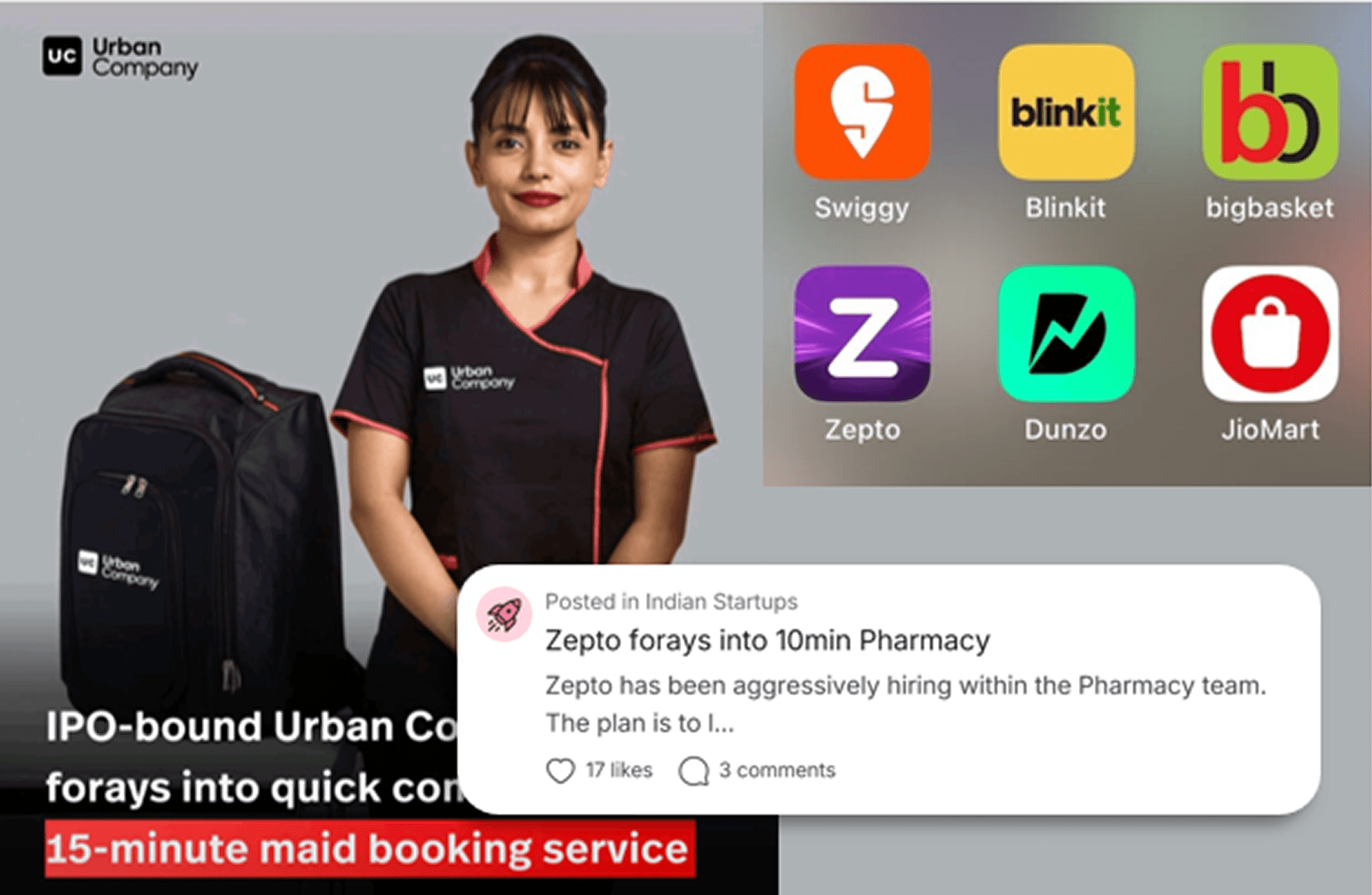
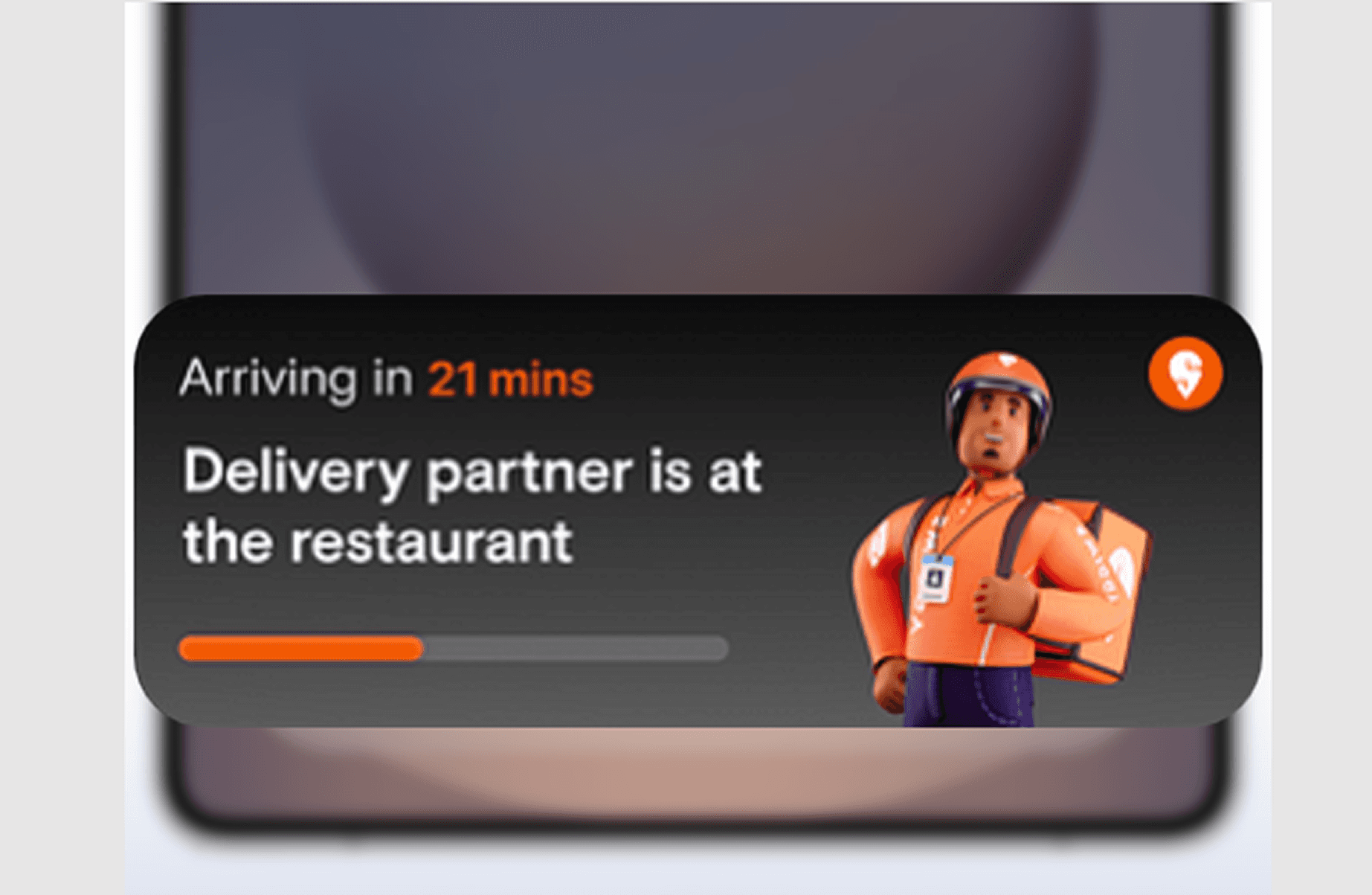
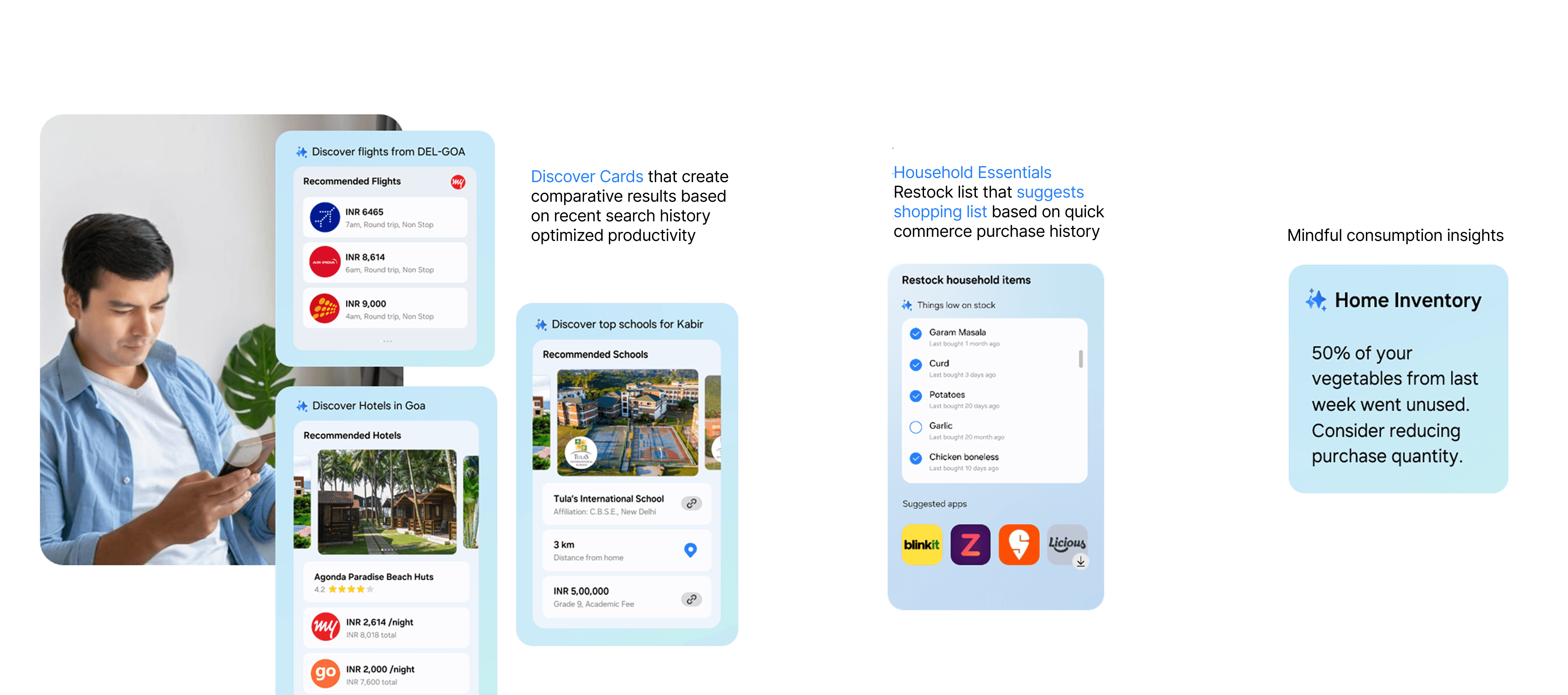
Mega Productivity Users were productivising at speed ,stacking Swiggy, Blinkit, Zepto, Urban Company across a single hour.
The friction wasn't access. It was coordination across a fragmented ecosystem.
Super App Signals — New AI Service Models
90% of Indian consumers prefer a single app to access digital services. The market was already signalling a desire for consolidation.
— Accenture, 2024
Micro / Byte-size UX — Universal Interface
40% of Indians already using AI on mobile for contextual queries ,travel, weather, local conditions.
The expectation of ambient, glanceable intelligence was forming before the technology was ready to deliver it.
💡 INSIGHT The pattern across all three: users were doing the coordination work themselves, across fragmented tools, in real time. That was the design opportunity — move the burden from the user to the system.
IDEATE AT THE RIGHT LEVEL
The research made one thing clear: the opportunity wasn't at the app level. What was missing was the intelligence layer above the apps.
That reframing changed everything. We decided to ideate at the ecosystem and agentic OS level — not designing features for a single device, but designing intelligence that moves across the entire Galaxy ecosystem as a unified system.
To do that, we first had to understand what the ecosystem actually was.
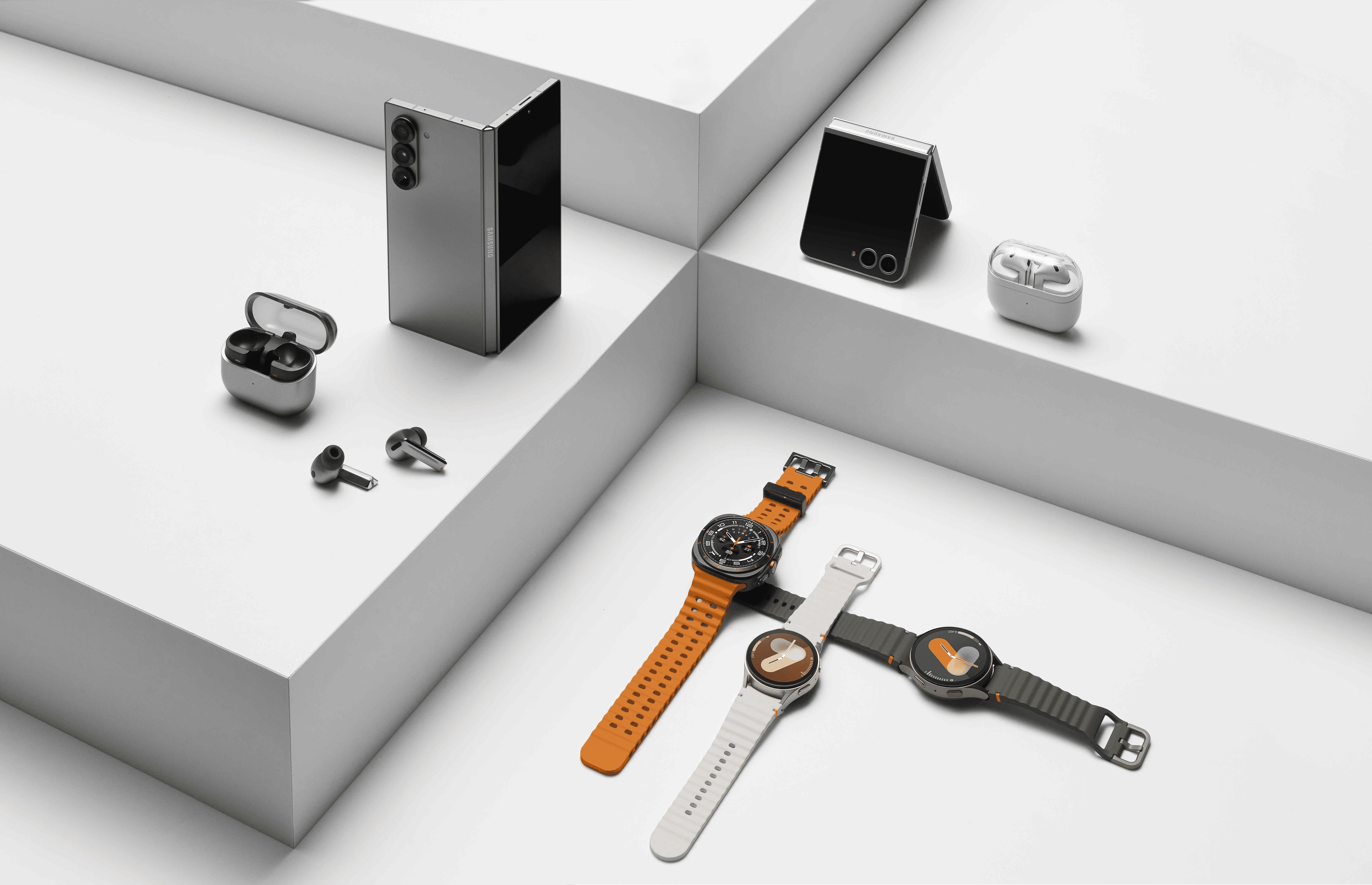
Before ideating, we studied every device in the Galaxy portfolio, not by spec, but by presence:
When is each device in the user's hand, on their body, in their peripheral attention?
What does each surface see that the others don't?
Where does context live, and where does it get lost?
THE CHANNEL DECISION
If the intelligence needed to be omnipresent — available at every moment without demanding attention — it needed a channel that was already omnipresent.
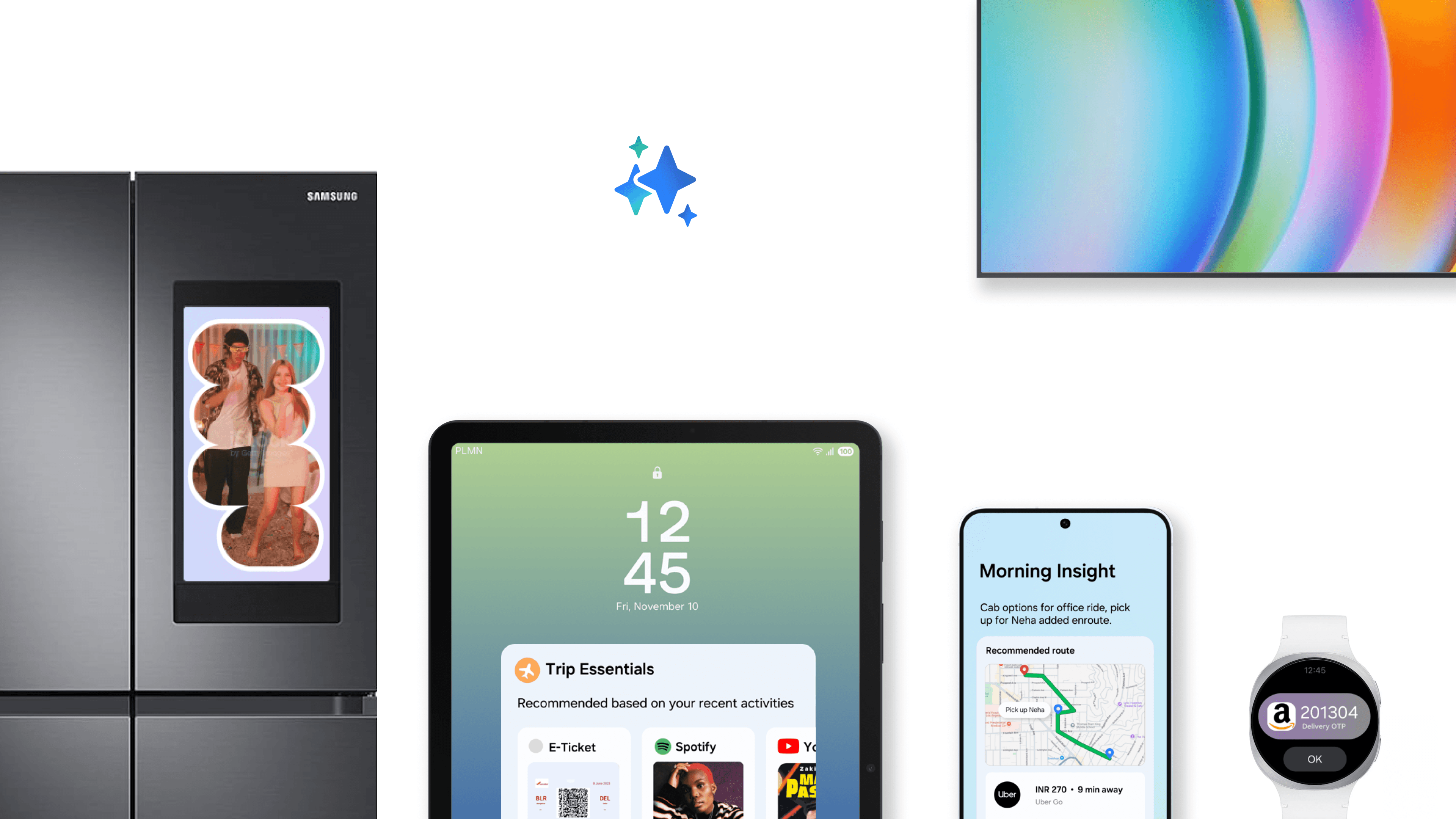
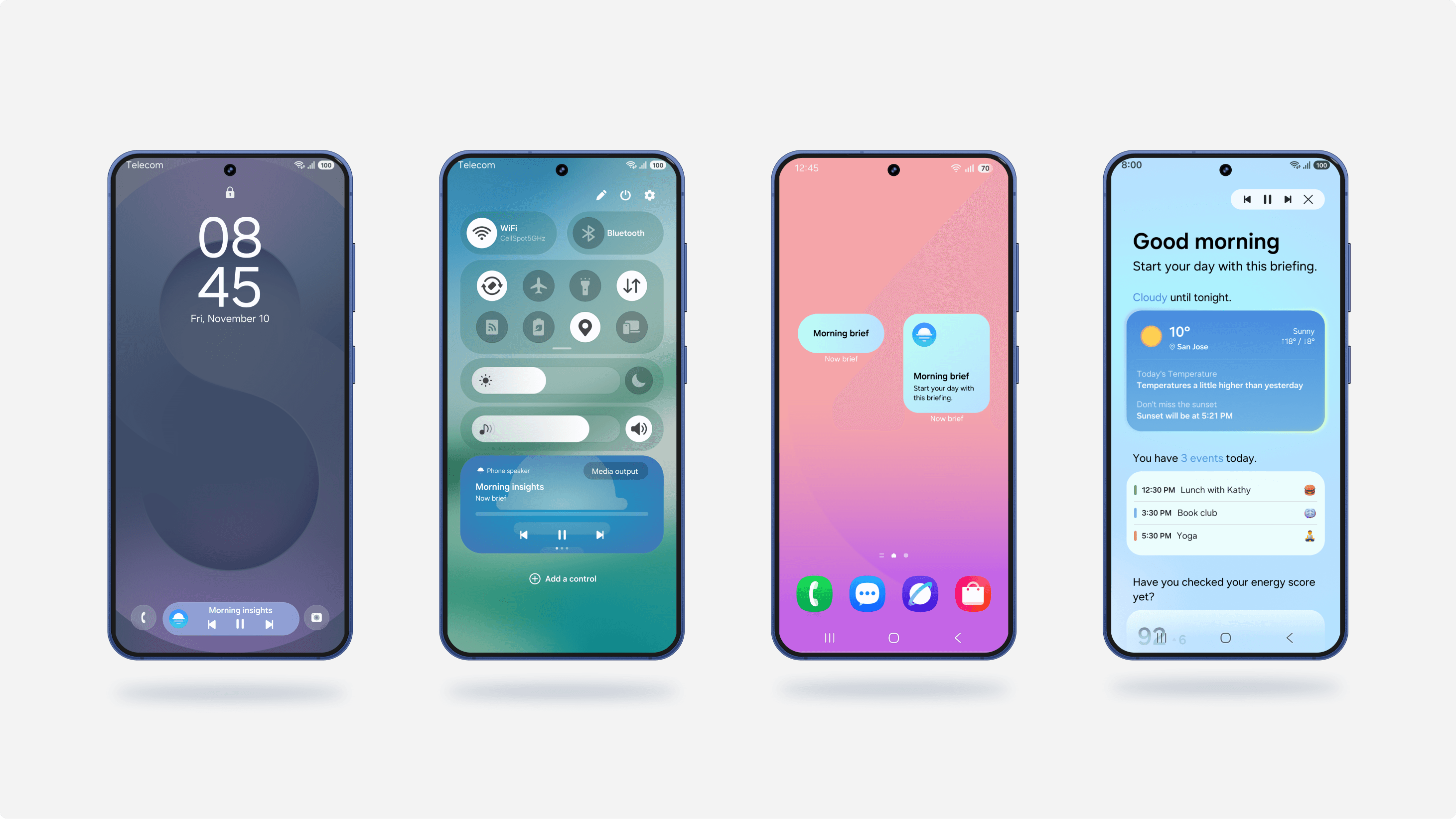
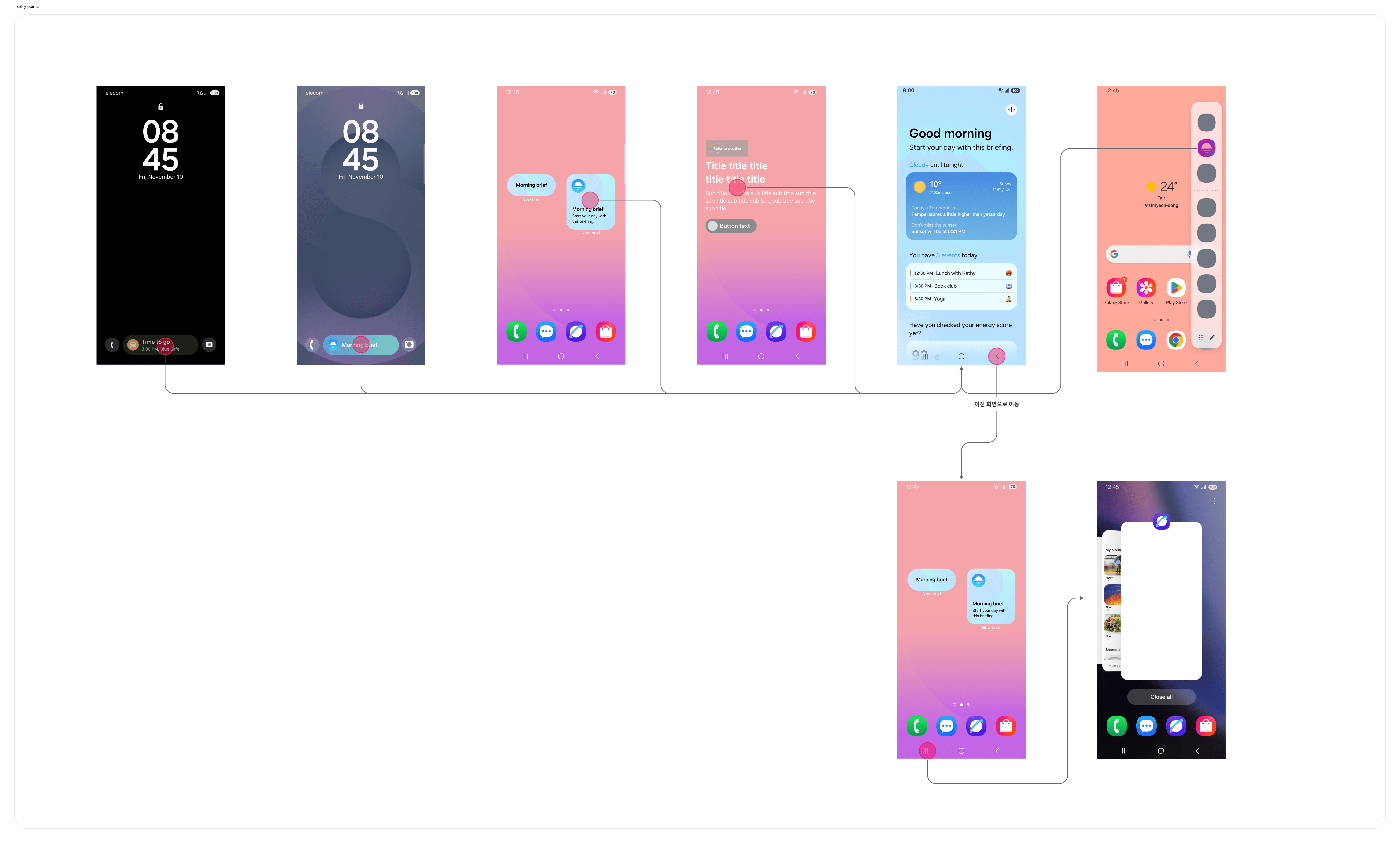
Now Brief already was. Present across the entire Galaxy system , from Always-on Display to lock screen to home screen to its own independent app, it wasn't a new surface to build.
It was an existing thread through every moment of the user's day, waiting to carry something meaningful.
If the intelligence needed to be omnipresent — available at every moment without demanding attention — it needed a channel that was already omnipresent.
Now Brief already was. Present across the entire Galaxy system , from Always-on Display to lock screen to home screen to its own independent app, it wasn't a new surface to build.
It was an existing thread through every moment of the user's day, waiting to carry something meaningful.
⚡ CHALLENGE Now Brief already existed. But it wasn't ours to design for.
The touchpoint had its own owner ,a separate team with their own roadmap, their own priorities, and understandable skepticism about an external team proposing to extend their surface.
Getting access wasn't a given. It had to be earned.
RUTHLESSLY PRIORITIZE
Four pillars. Dozens of possible directions. We applied the Kano Model to cut without guessing — mapping every concept against two questions:
How much does it satisfy when present?
How much does it frustrate when absent?
We also mapped a full day in the user's life — not personas, but moment-by-moment context
Two territories consistently rose to the top
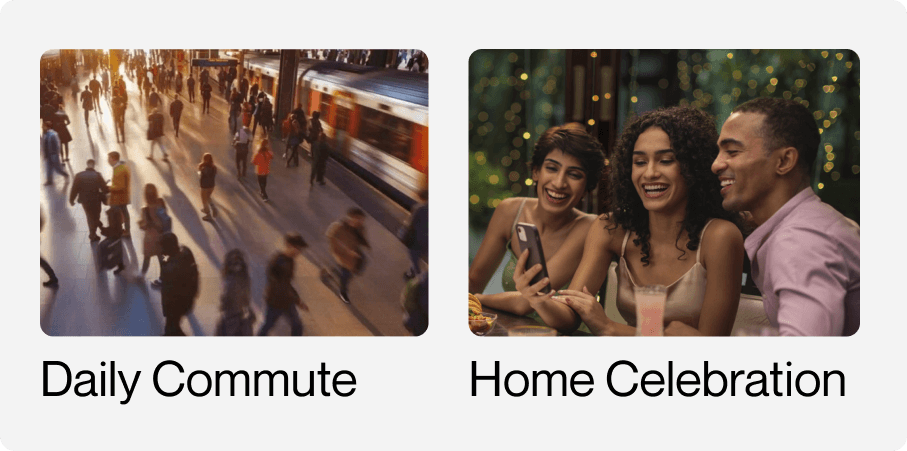
Commute (must-have) — Very high pain, very high frequency, excellent device signal fit
Celebration (delighter) — High emotional stakes, strong multi-device signal availability
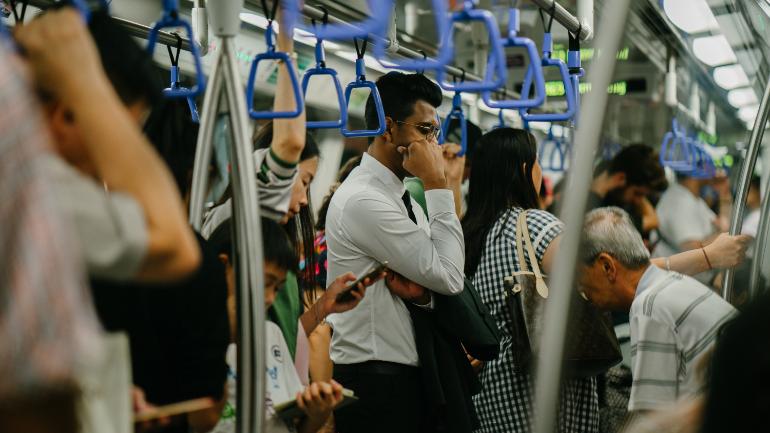
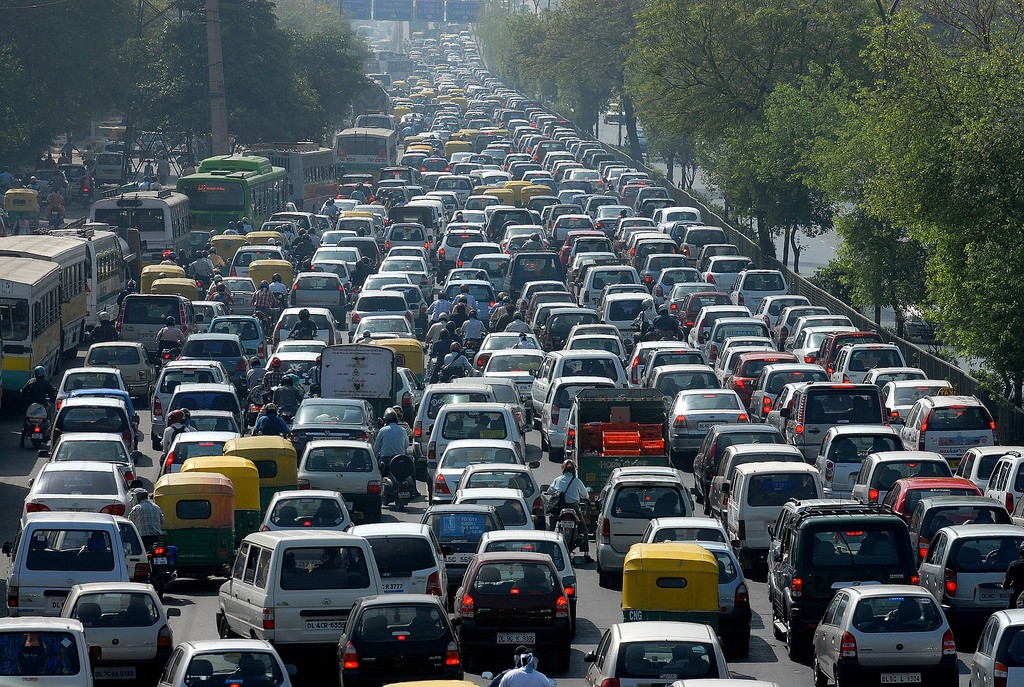
Urban cities in emmerging regions experience some of the world's most intense rush hour congestions. impacting commuters and businesses.
We are more connected than ever, yet daily commutes remain chaotic.
An average Indian is spending 15% more time on daily commute
80% of the working professional say, commute affects their daily productivity
-Linkedin Workforce Report 2024
61% increase in adoption of smart personal devices in 2025, compared to 23% in 2023
-Techarc, India Connected Consumers , 2025
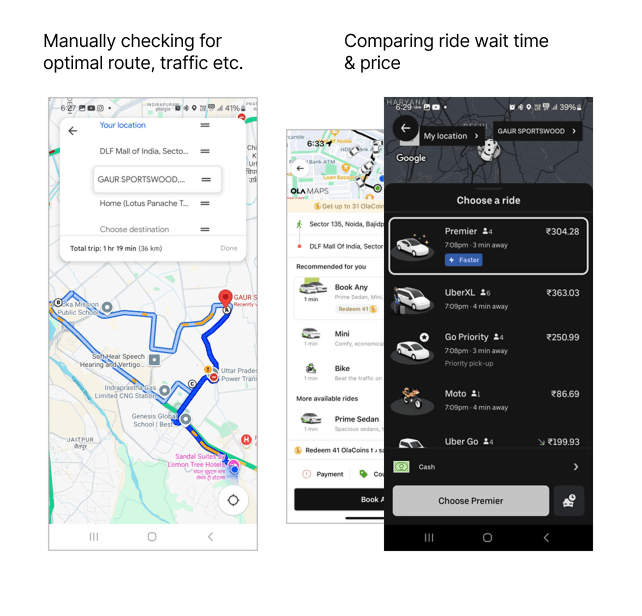
Need for cross-opp intelligence
Emerging aggregator apps leverage users behavior of comparing prices, wait times
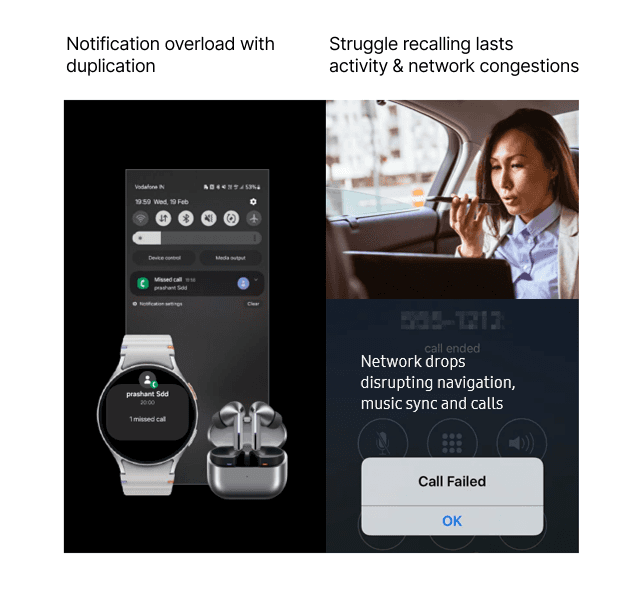
Lack of convenient task continuity
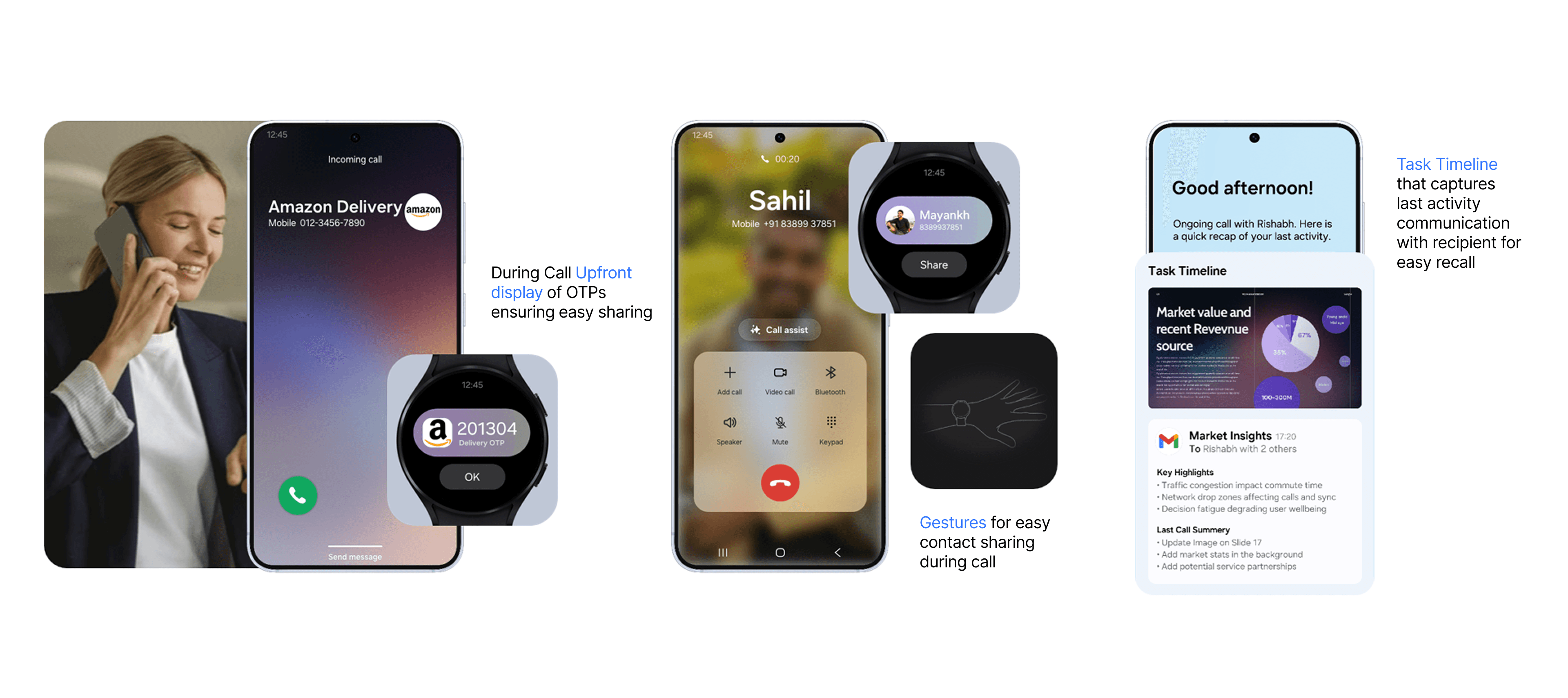
81% Indian professionals check work emails/ messages during commute
Need for hands-free authentications
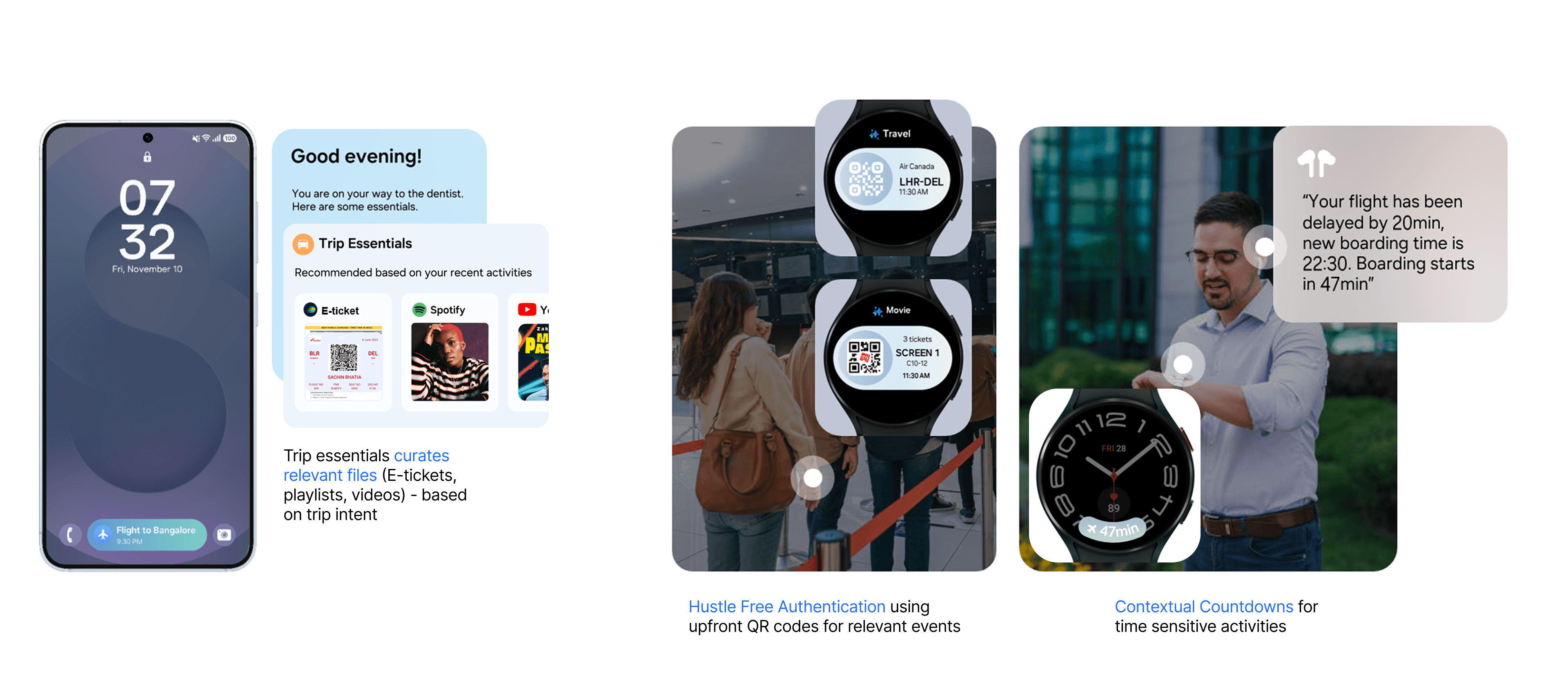
With QR codes and e-tickets usually scanned in mobile devices - delayed check-in processes as phones are tucked away in pockets for hands-free Convenience
How might we transform daily rush struggles into a stress-free, AI-optimised journey?
How might we transform daily rush struggles into a stress-free, AI-optimised journey?
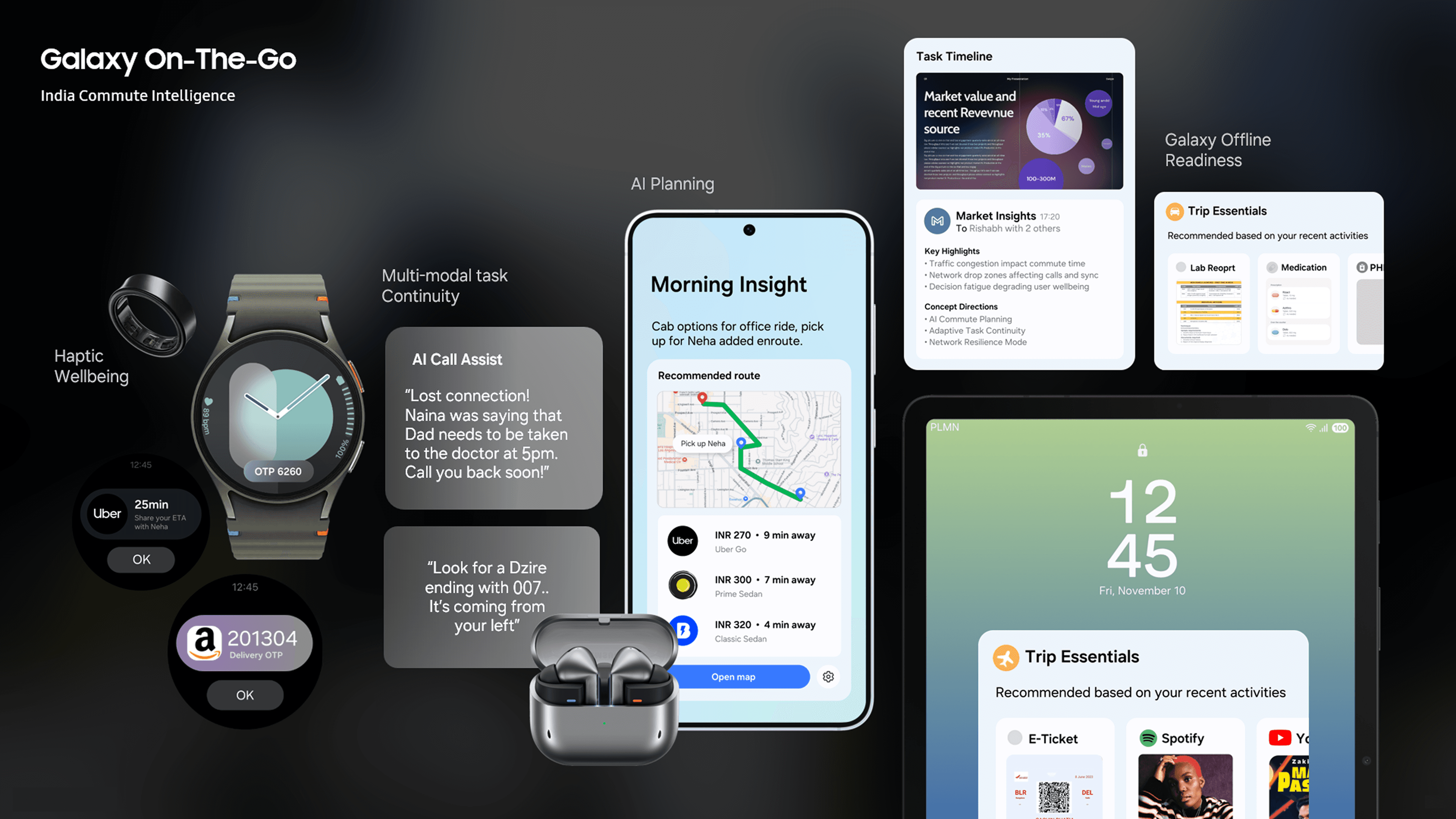
Commute Intelligence
Commute intelligence is key to a seamless, stress-free, and time-efficient mobility experience
Commute Intelligence that leverages Now Brief and Now Bar for a seamless, stress-free and time-efficient mobility experience.
We presented Commute Intelligence to stakeholders. It was approved.
⚡ THE TWIST In the same meeting, we learned two things that changed the scope entirely.
A partnership with Google Gemini was underway.
And Uber was in conversation as a potential integration partner for cab booking.
We were directed to develop deeper visual explorations specifically around the cab booking experience — the most tangible, demonstrable use case for both the Google and Uber partnerships.
Broad ecosystem ideation had served its purpose. Now the work needed to prove something specific.
🏆 WIN :The narrowing wasn't a loss of ambition. It was the right design decision. One well-executed agentic flow is more convincing than four half-formed ones, to stakeholders, to partners, and to users.
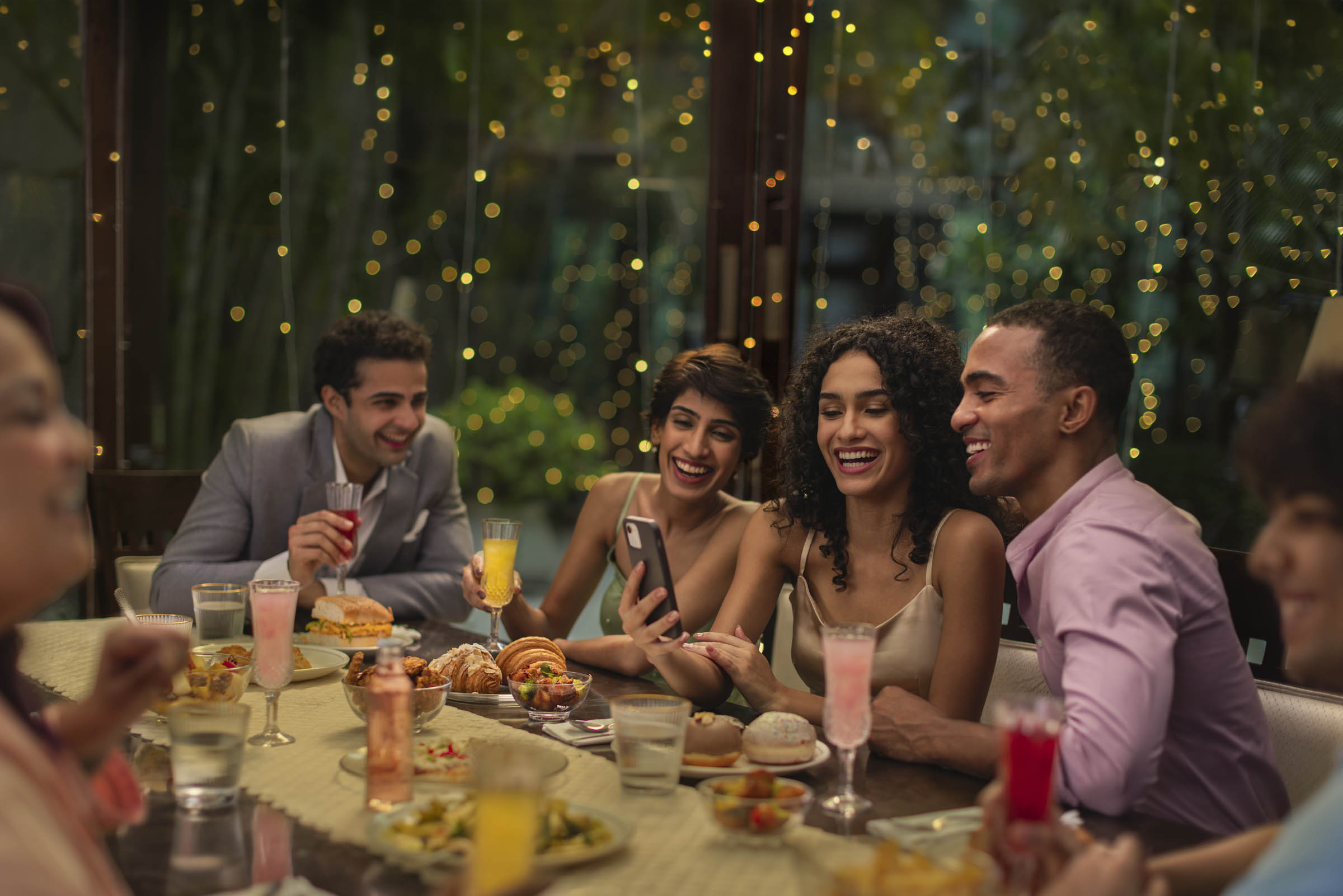
Indian celebrations are integral part of social culture, spanning from weddings, festivals to casual house parties.
Today, house parties define the new-age social influence
Indian celebrations are
integral part of social culture - emerging lifestyle, swapping clubs for couches.
"We are swapping clubs for couches.
For me and my friends, it’s comfort and camaraderie for us. We are looking forward to chilling out together and having a great time."
-Times of India, 2025
201% Surge
According to data from Blinkit and Swiggy Instamart, the evening saw a surge in demand for snacks, beverages, and other party essentials, reflecting a nationwide trend of home celebrations
-Economic Times
Celebrations today are stitched together by apps and services, not designed as a connected experience.
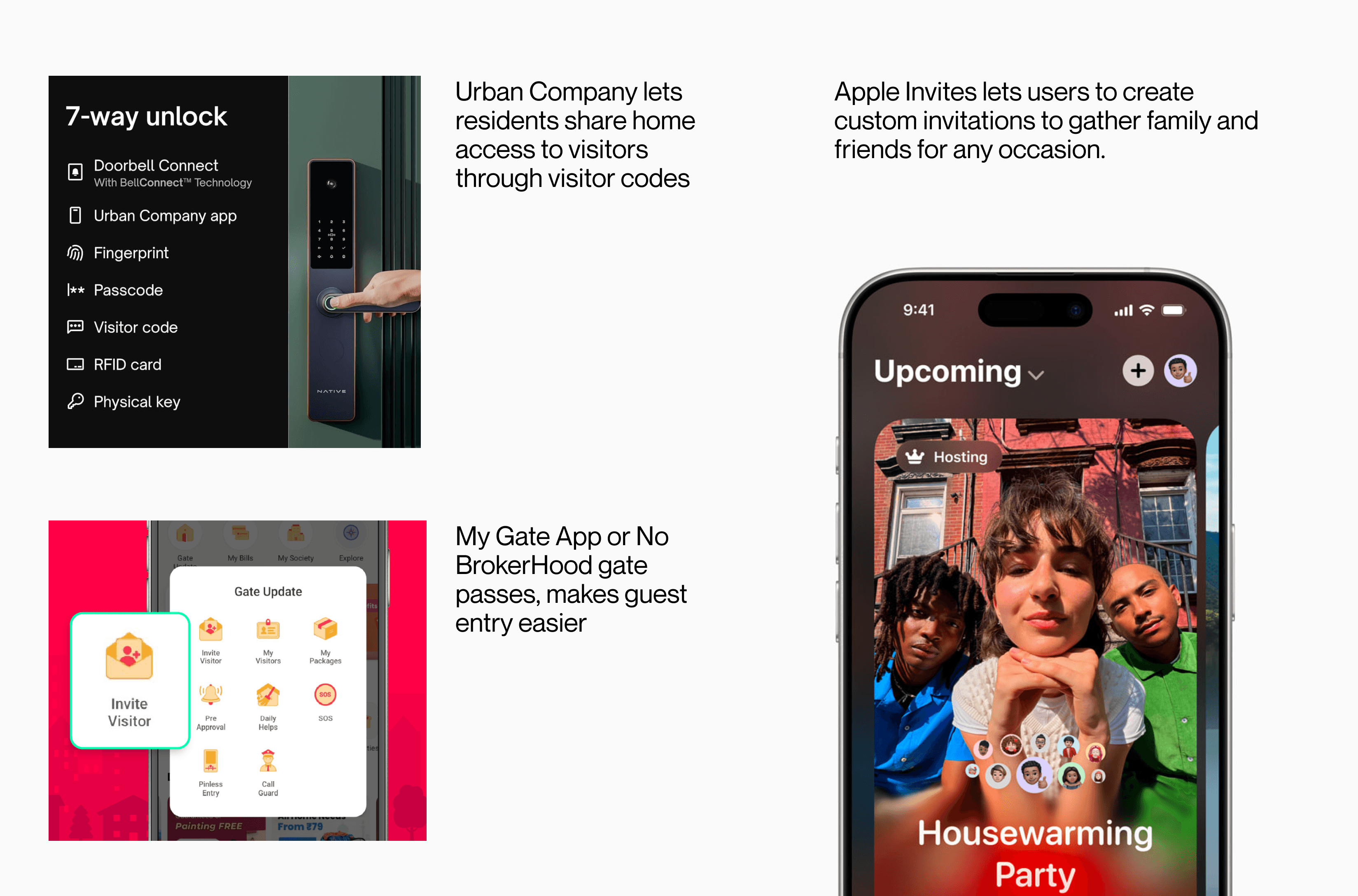
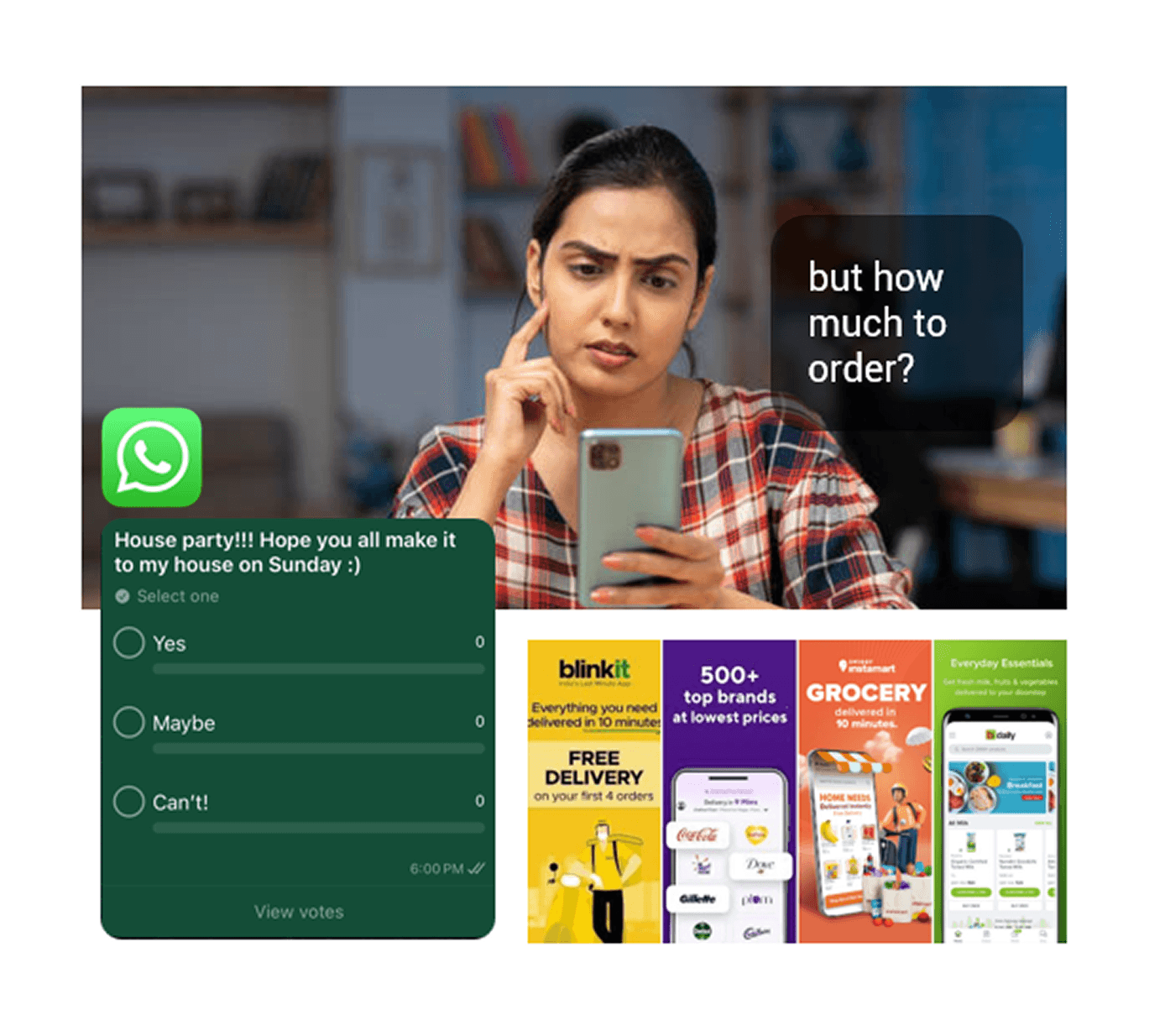
Managing invitations & visitor access - Solved as isolated utilities
Facilitating together-time & shared moments-Solved as moment-based experiences
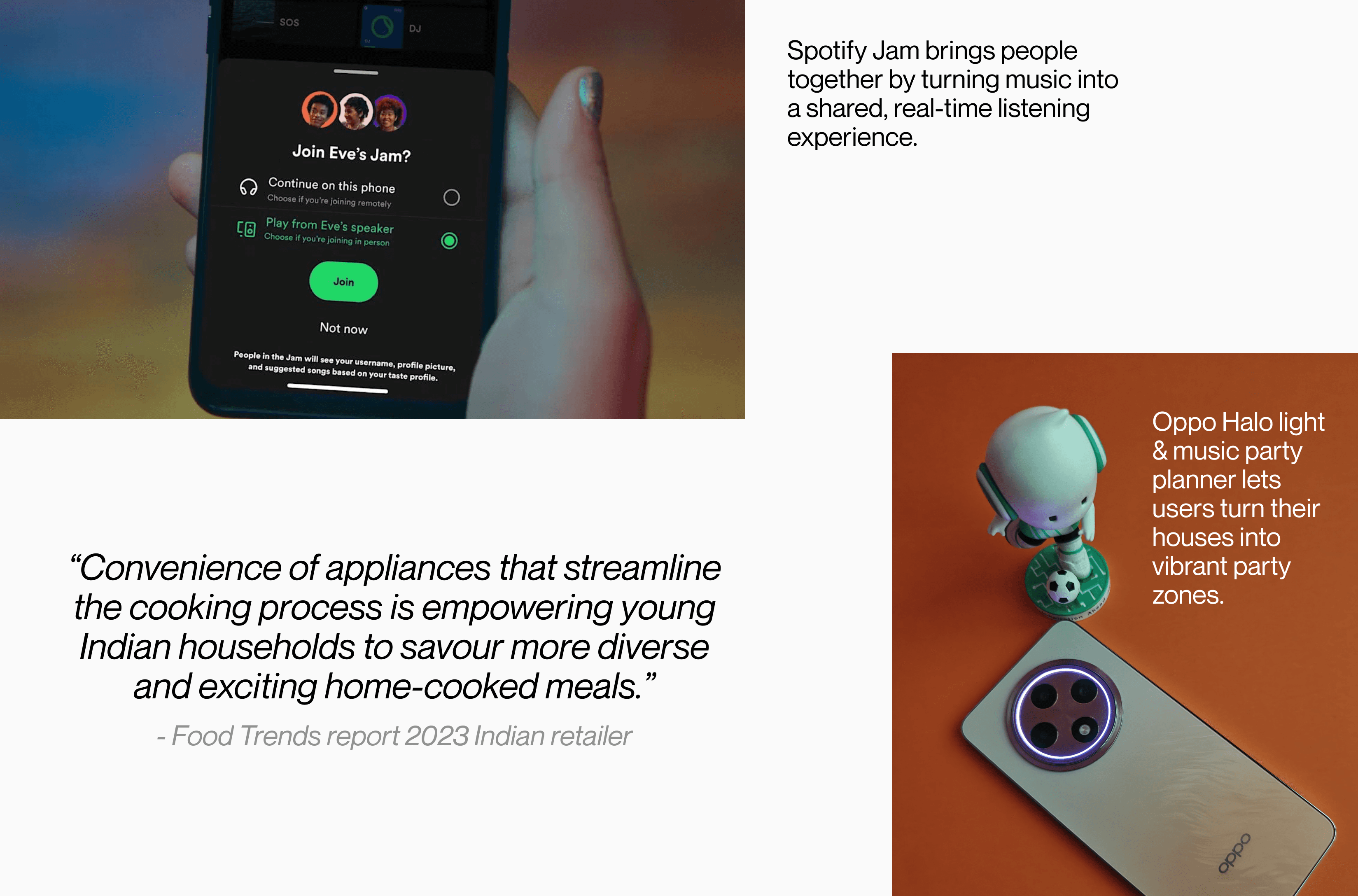
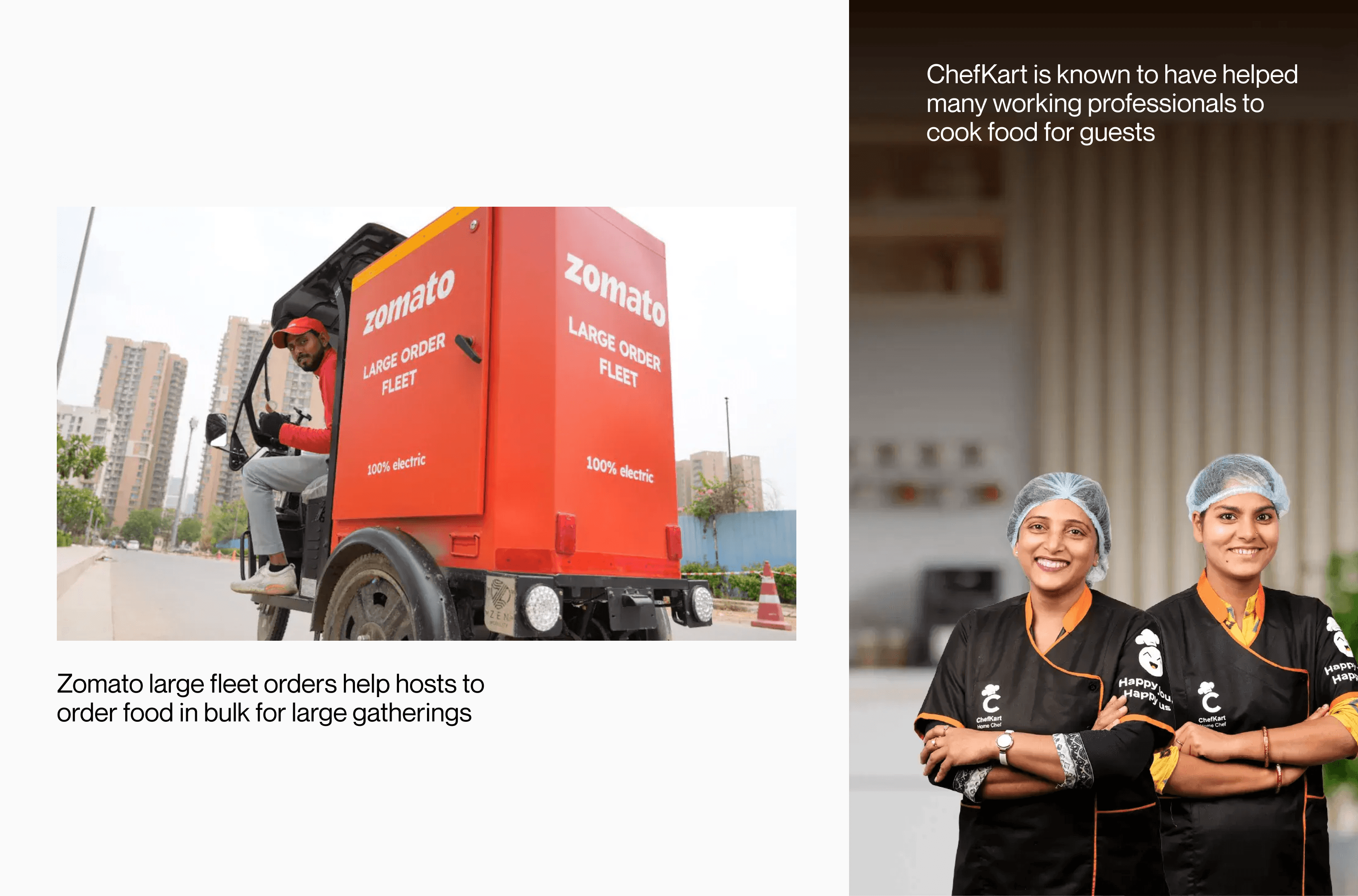
Hosting with professional cooks & bulk orders- Solved through service marketplaces
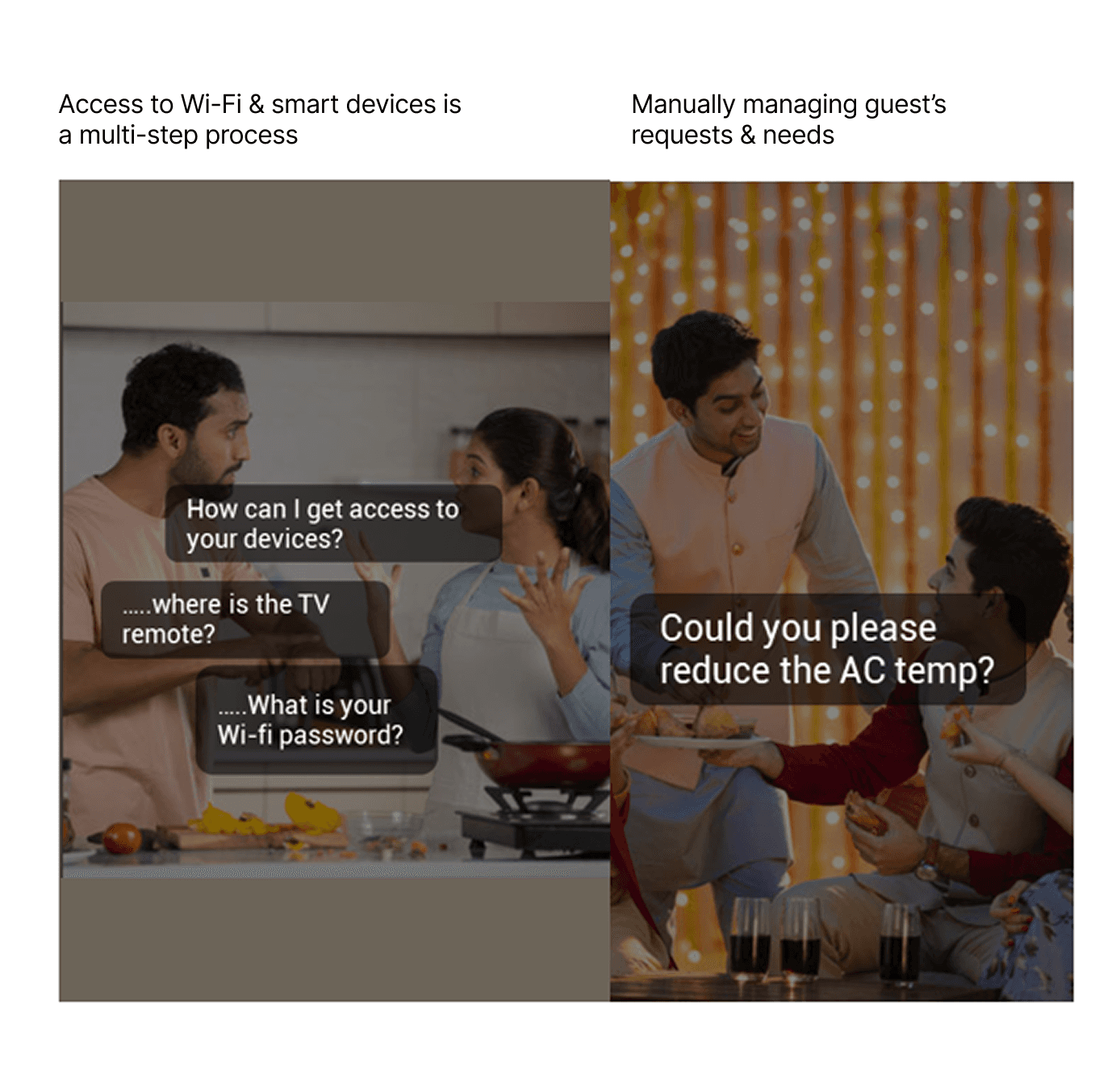
Current Experinece gaps
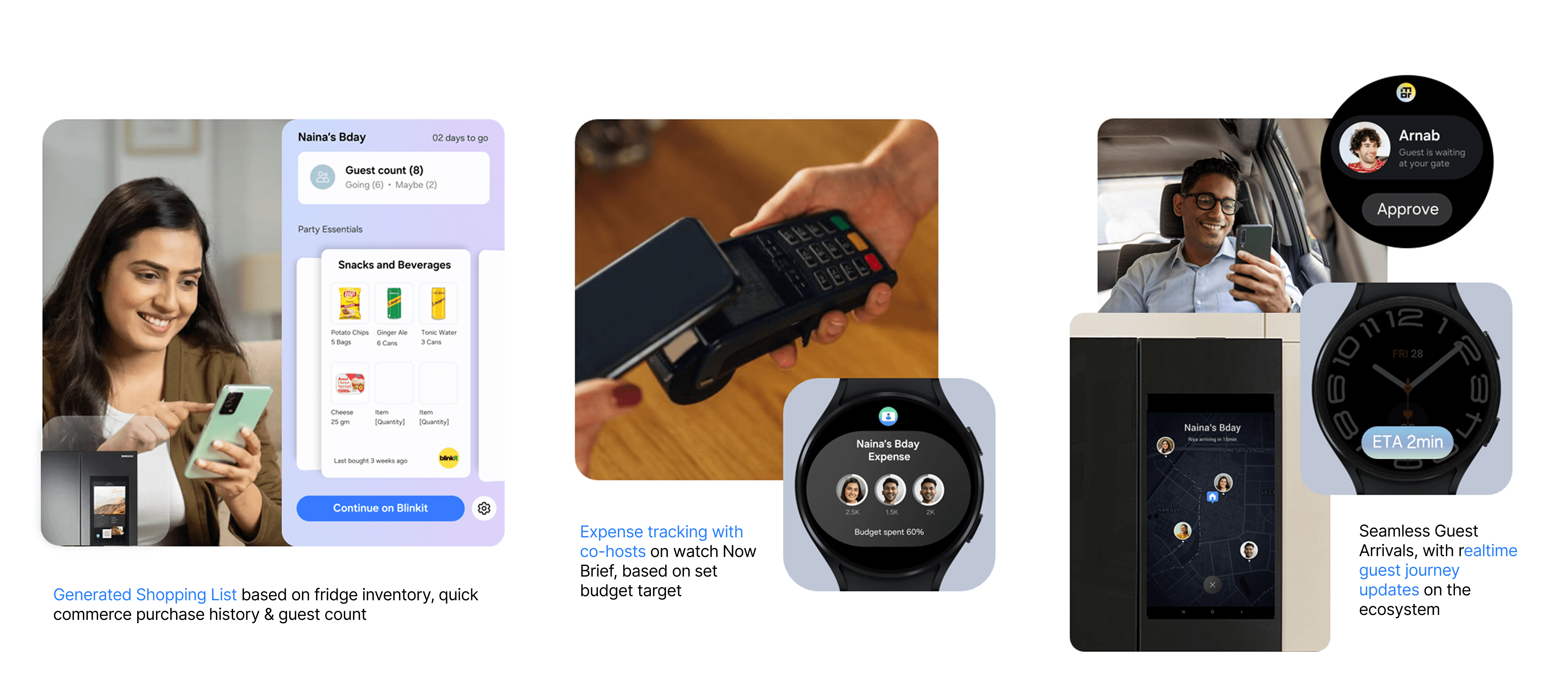
Need for hassle-free planning & coordination
3P dependency for party co-ordination and planning - 50% of monthly budget have been spent on packaged food & food delivery services.
Need for easy access &
synced experiences
73% of millennlals are willing to spend more on experiences than on physical things.
Need for social validation
and digital influence
Over 60% of young Indians now believe digital validation is more important than the conventional social acceptance mechanisms.
Delloitte,2024
How might we make India celebrations an effortless, Al-driven luxury?
Be present. We’ll handle the rest.
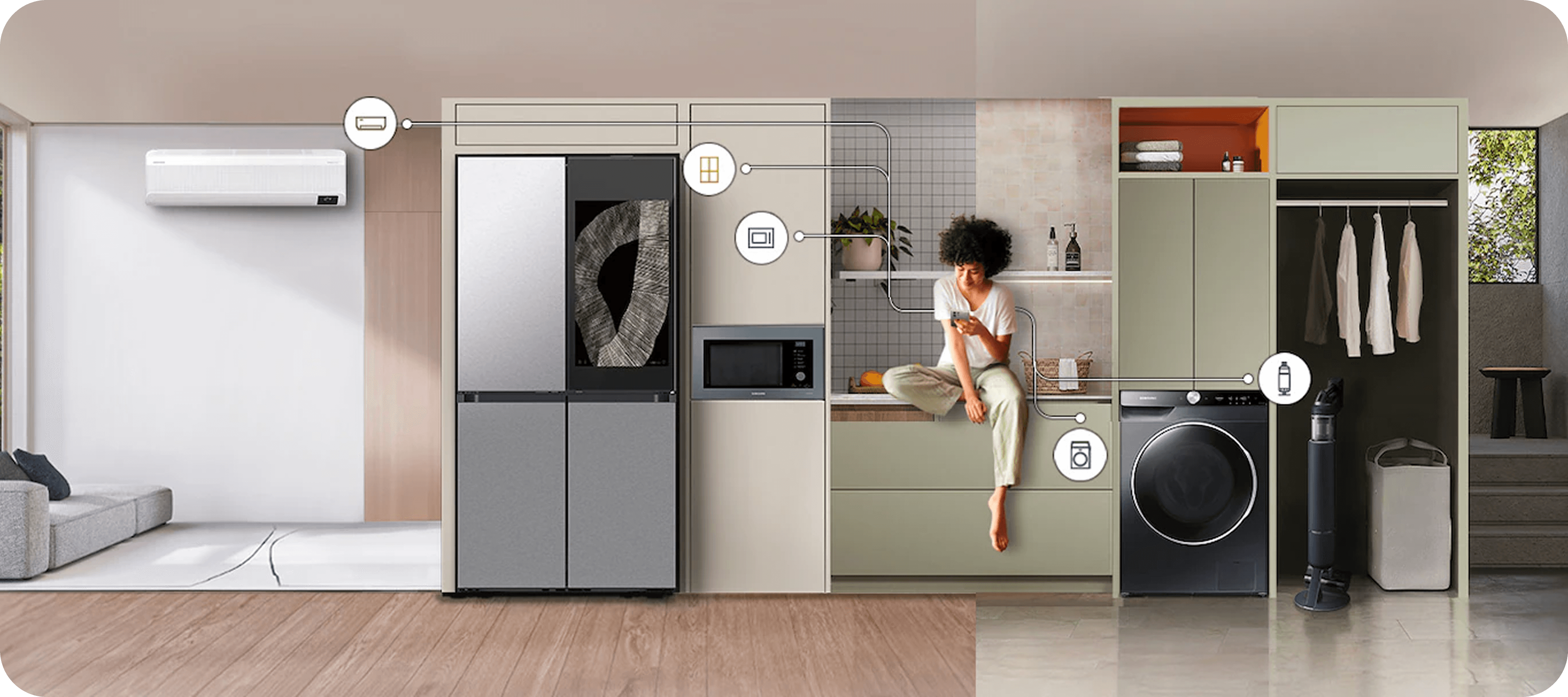
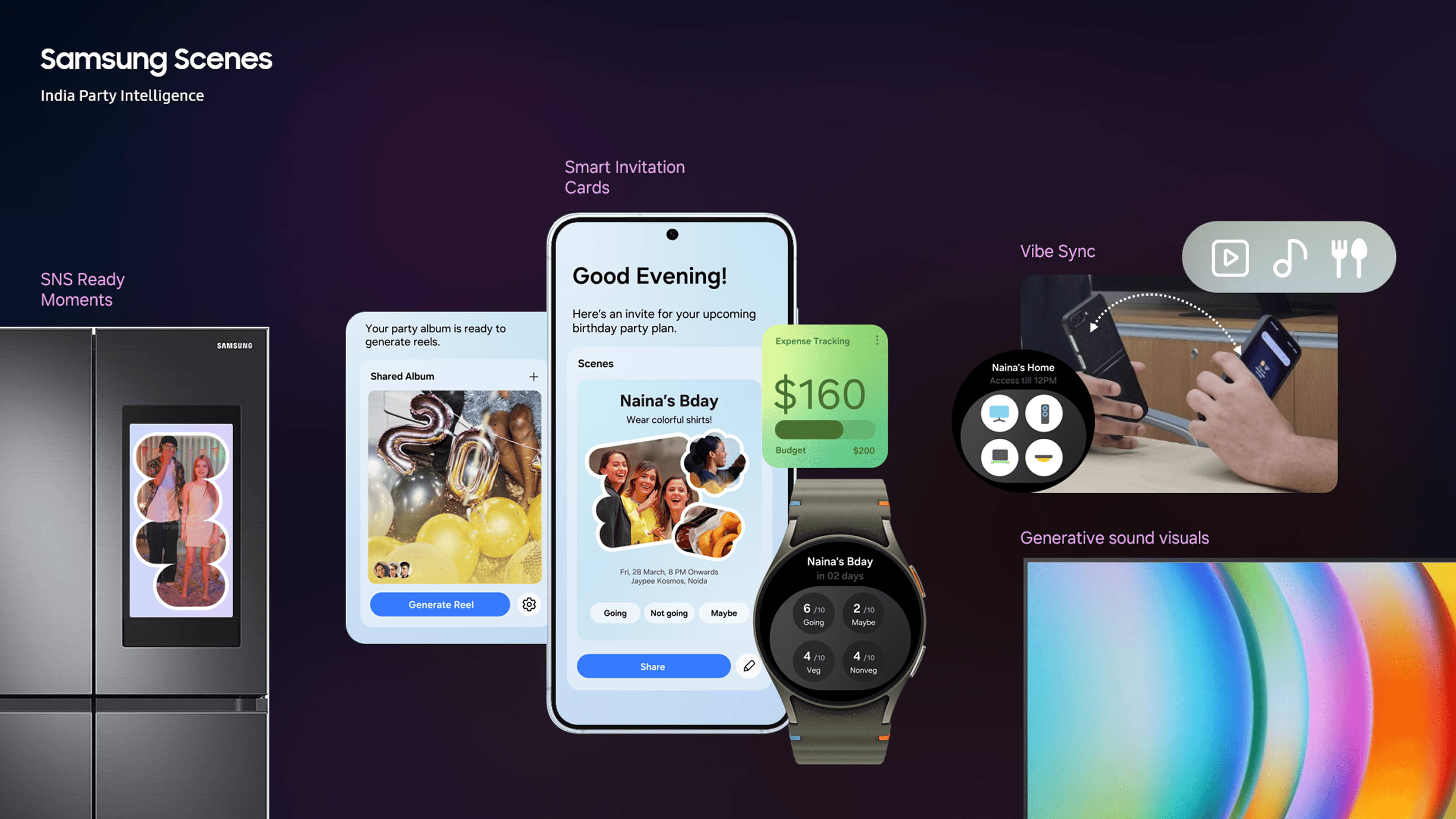
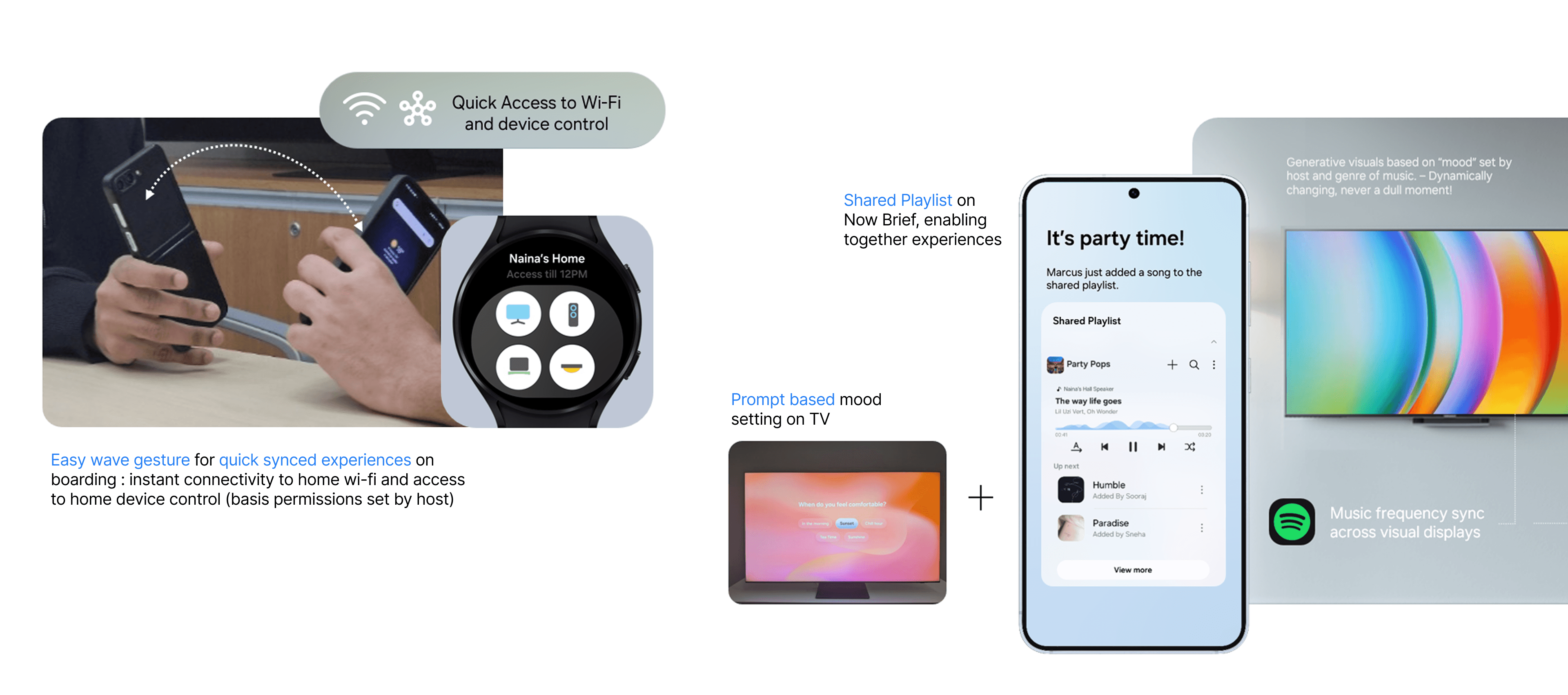
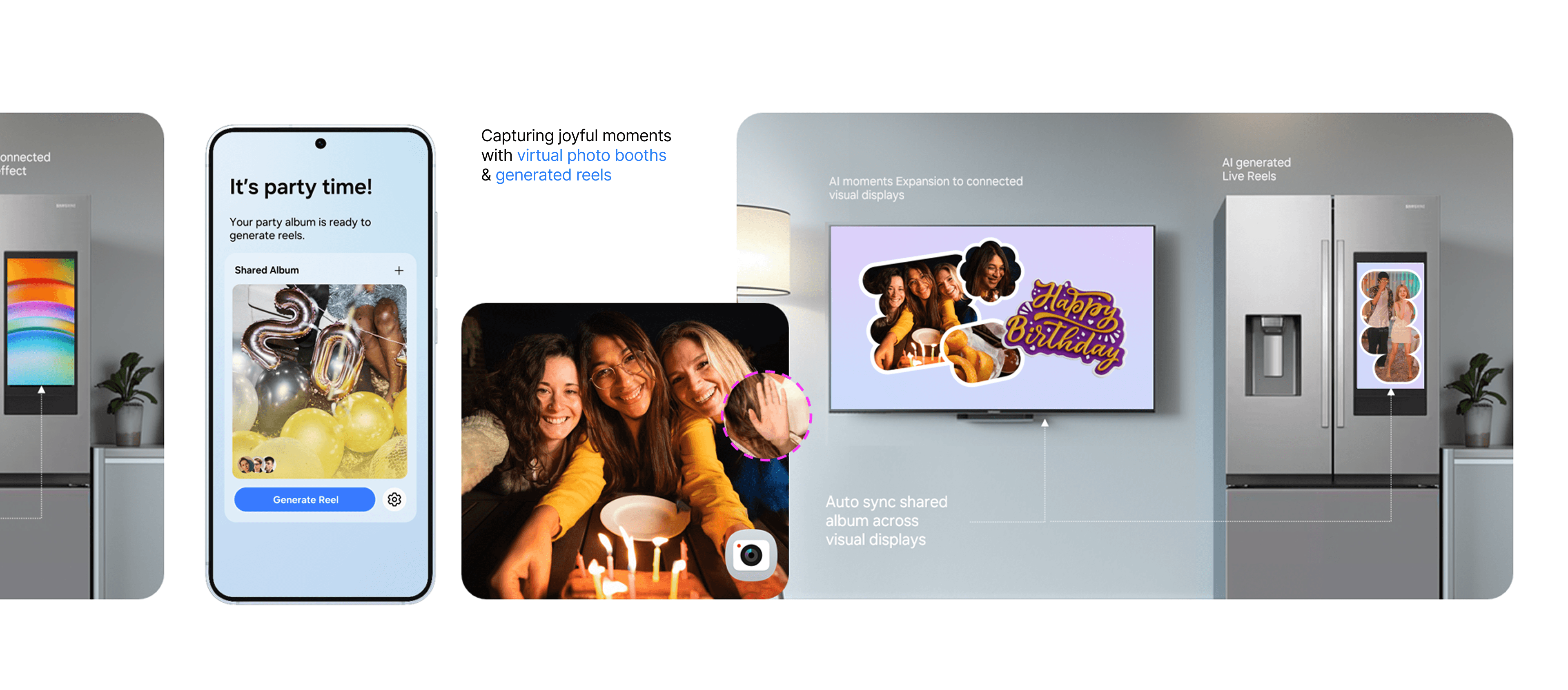
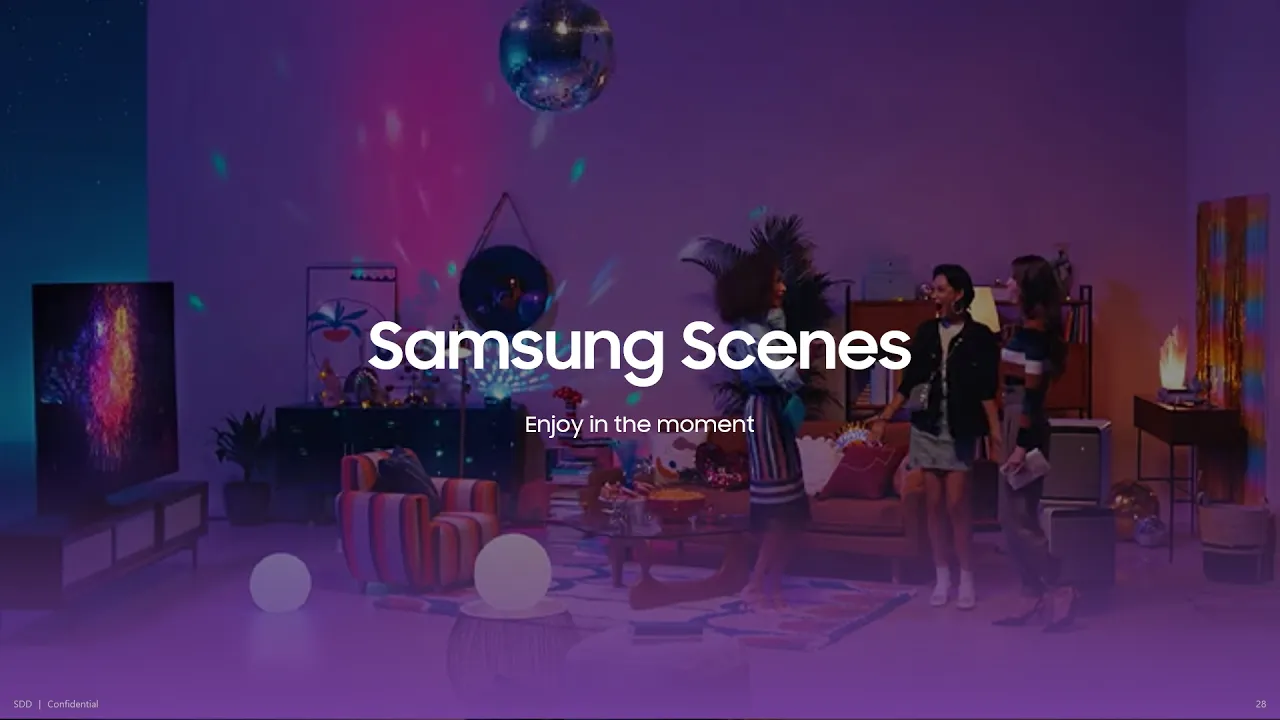
An AI-powered smart home experience that orchestrates invitations, ambiance, entertainment, and memories—so hosts and guests can truly enjoy the moment.
Key Experience: Smart Invitation Cards
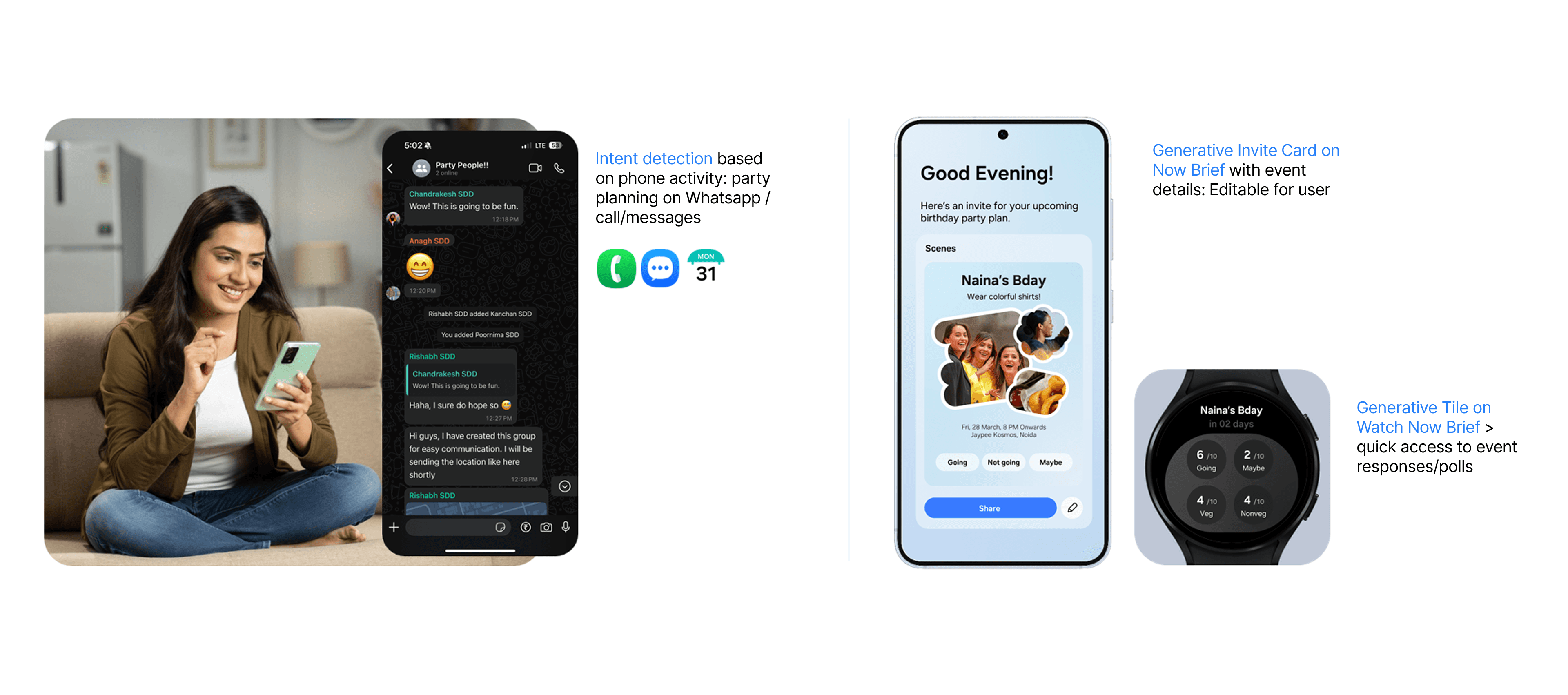
Beautiful, intelligent invitations that automatically manage guest lists, entry access, timing, preferences, and event logistics—reducing planning effort before the celebration even begins.
Key Experience: Vibe Sync & Immersive Entertainment
Guest preferences seamlessly sync across lighting, music, temperature, and displays to create a welcoming atmosphere that feels personal—without manual setup.
AI-generated visuals and lighting dynamically sync with music and mood across TVs, lights, and speakers—transforming living spaces into immersive party zones.
We took the final ideas a step further—refining them, building POCs, and creating demo videos to validate the direction. Let’s watch!
What worked
Extending Now Brief rather than building a new surface. The architecture proved flexible enough to survive HQ recontextualising it into markets we hadn't originally designed for.
What I'd do differently
Formalise the localisation handoff before HQ moves a feature to new markets. Cultural assumptions need documentation, not just good design.
The learning
AI experiences don't earn trust through capability. They earn it through restraint — knowing when to surface, when to stay silent, when to put the user unambiguously in control. This project is where I learned that.
Extending Now Brief rather than building a new surface. The architecture proved flexible enough to survive HQ recontextualising it into markets we hadn't originally designed for.
What I'd do differently
Formalise the localisation handoff before HQ moves a feature to new markets. Cultural assumptions need documentation, not just good design.
The learning
AI experiences don't earn trust through capability. They earn it through restraint — knowing when to surface, when to stay silent, when to put the user unambiguously in control. This project is where I learned that.
Development is currently ongoing, and we’re looking forward to seeing this come alive in the market soon!